
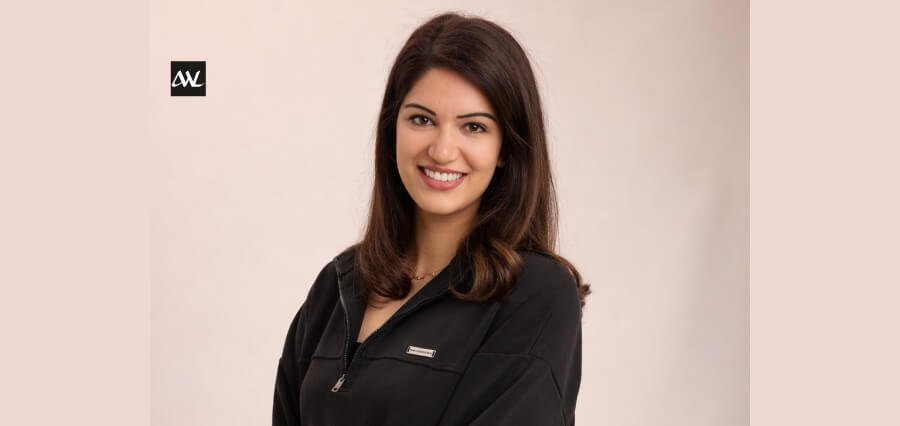
The future of work in the Middle East is always discussed in relation to technology, futuristic projects, and economic changes. Sabahatt Habib has a different opinion about the matter. She says that sustainable change starts with people. As a successful TEDx speaker, LinkedIn Top Voice and Chief People Officer, Sabahatt Habib has managed to become one of the most prominent voices when it comes to discussing the future of work and artificial intelligence.
Sabahatt’s experience reflects the principles she believes in. Born in Kenya, Sabahatt Habib moved to the UAE about two decades later and built her career in one of the world’s most diverse work environments. These experiences taught her that personal and professional growth comes from embracing challenges and learning from diverse perspectives. She has applied this mindset to shape her leadership style and workforce strategies, earning recognition as a people-centric transformational leader.
People at the Heart of Growth
Sabahatt Habib believes that economic transformation begins with people. When asked how her HR strategy aligns with the Middle East’s broader economic ambitions, she says that achieving goals in artificial intelligence, sustainability, innovation and entrepreneurship depends on building a workforce with the right skills, leadership capabilities and mindset. She does not see HR as a function that simply supports business strategy. Instead, she believes HR plays a central role in creating the workforce needed to execute that strategy.
Her priorities include developing learning agility across teams, integrating artificial intelligence responsibly into daily operations, building commercially aware leaders, and making innovation and adaptability part of everyday work. According to Sabahatt Habib, organizations that succeed over the long term are those that continue to invest in their people. She believes that as markets change and technology advances, a skilled and adaptable workforce becomes the strongest source of competitive advantage.
Building Trust Through Humanity
Sabahatt Habib believes that humanity is the foundation of high performance. According to her, organizations achieve the best results when leaders create an environment where people feel valued, supported and empowered to perform at their best.
Her leadership philosophy has evolved over the years. Early in her career, she believed that effective leaders needed to have all the answers. Today, she believes the true role of a leader is to create an environment where others feel confident to share their ideas and solutions. She says this shift has transformed the way she leads.
Sabahatt Habib also believes that strong leadership requires balancing different qualities. Effective leaders make decisions quickly while listening carefully. They hold people accountable while showing empathy. In an increasingly complex business environment, she sees curiosity as more valuable than certainty and humility as a key leadership strength. She often advises emerging leaders that job titles may provide authority, but trust must be earned through consistent actions. In her view, it is trust, not authority, that inspires people to follow a leader.
Balancing National Talent Development
Sabahatt Habib believes that developing national talent and attracting global professionals are complementary goals. When discussing nationalization in the Gulf, she says organizations do not have to choose between local and international talent. Instead, long-term success depends on strengthening both.
She believes nationalization should be viewed as more than a hiring target or a compliance requirement. Success should be measured by how many national employees grow into leadership roles and contribute to the long-term direction of their organizations.
At the same time, Sabahatt Habib recognizes the important role that international professionals play. She says they bring diverse perspectives, global experience and innovative ways of solving business challenges. According to her, the strongest organizations are those that create a culture where local and international talent learn from each other. International professionals help develop local capabilities, while national employees contribute valuable cultural understanding, market knowledge and long-term continuity.
Unlocking Potential with AI
Sabahatt Habib believes that artificial intelligence is transforming not only technology but also workplace leadership and culture. She says organizations make a mistake when they treat AI as only a technology implementation. Instead, she views it as a leadership transformation guided by a simple principle: AI should automate tasks, not replace human value.
She believes the greatest benefit of AI is its ability to reduce repetitive work, allowing employees to focus on areas where they create the most value. These include solving complex problems, building relationships, generating new ideas and leading teams. As AI becomes more capable, she says qualities such as curiosity, empathy, creativity, sound judgment and ethical decision-making will become even more important for effective leadership.
Sabahatt Habib also believes that HR has a broader responsibility than introducing new technologies. It must help employees develop the confidence and skills needed to work effectively alongside AI. In her view, the organizations that will succeed are not those that adopt AI the fastest, but those that use it to strengthen human potential.
Guiding Teams Through Uncertainty
Sabahatt Habib believes that employees do not resist change itself. Instead, they struggle with uncertainty. This understanding shapes her approach to managing organizational change. She views communication as an ongoing process that requires honesty, transparency and consistency rather than a single announcement.
She believes it is equally important to help employees understand the purpose behind every change. When people see how their work contributes to a larger goal, they are better prepared to navigate uncertainty. Sabahatt Habib also emphasizes the importance of listening. She says employees who are closest to day-to-day operations often provide the most valuable insights during periods of transformation.
She also emphasizes the importance of vulnerability within executive teams. In her view, vulnerability is not about having fewer answers. It is about acknowledging uncertainty, adapting when new information emerges, and encouraging diverse perspectives. She believes the strongest leadership teams are those where people feel comfortable expressing different viewpoints. Instead of measuring success by how quickly leaders make decisions, she believes effective leadership is reflected in the quality of discussions and the thoughtful debate that takes place before a decision is reached.
Nurturing Future Leaders
Sabahatt Habib believes the next generation of leaders will be defined by their ability to learn, adapt and grow. While technical expertise remains important, she believes it is no longer enough to succeed in today’s rapidly changing business environment.
She focuses on developing leaders with strong commercial thinking, learning agility, artificial intelligence literacy and emotional intelligence. She believes these qualities help leaders understand how businesses create value, adapt to technological change and keep employees engaged during periods of transformation. Sabahatt Habib encourages leaders to act as coaches rather than controllers. In her view, effective leadership is not about having every answer. It is about asking meaningful questions, empowering others and creating opportunities for people to grow.
Leadership Beyond Wellness
Sabahatt Habib believes employee wellbeing cannot be achieved through wellness initiatives alone. In her view, wellbeing is the result of strong leadership rather than workplace programs. She says organizations can offer a wide range of wellness benefits, but these efforts will have limited impact if leaders create a culture of fear, avoid difficult conversations or fail to build trust.
She applies the same thinking to psychological safety. Sabahatt Habib believes psychological safety does not mean keeping employees comfortable at all times. Instead, it means creating an environment where people feel confident to ask questions, admit mistakes and challenge ideas without fear of negative consequences.
She believes psychological safety is essential for both innovation and high performance. For this reason, she places greater emphasis on developing capable and trustworthy leaders than on introducing additional employee engagement programmes.
Advice for Future HR Leaders
Sabahatt Habib advises aspiring HR professionals to focus on becoming strong business leaders rather than limiting themselves to traditional HR roles. She encourages them to build knowledge of finance, understand business operations and stay curious about technology and artificial intelligence. She believes the future of HR belongs to professionals who understand business as well as they understand people.
At the same time, she stresses that business knowledge should never come at the cost of empathy. She believes HR leaders are trusted with some of the most important moments in employees’ professional lives. For this reason, she says every decision should be guided by integrity, humility and respect for people.