
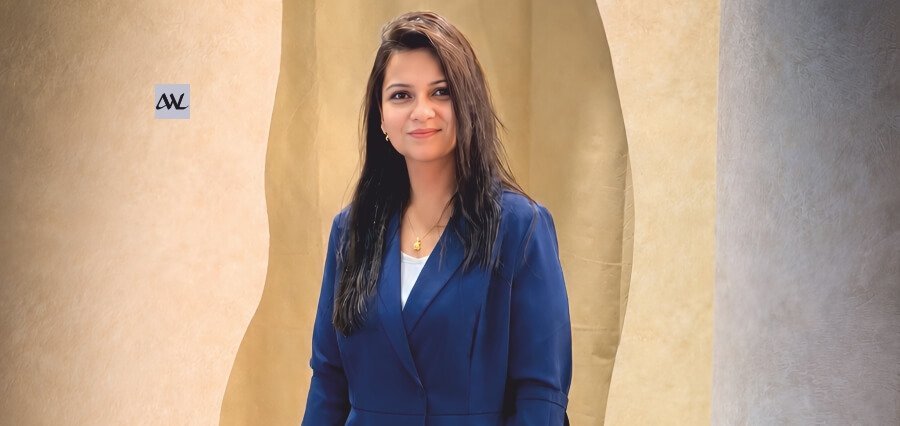
Some careers are influenced by luck; others are shaped with a clear sense of direction, an instinct for where meaning lives before the market catches up. Namita Shrivastava falls unmistakably into the second. The move to the UAE was never about comfort. It was about scale. When she left India, she was stepping into an environment that would pressure-test her ambitions, sharpen her instincts, and demand that she build.
With full determination and no guarantees, she entered a new market the way a master perfumer enters a formula: with precision, patience, and a refusal to settle for anything that does not endure. What followed was a global beauty and fragrance growth architect whose influence stretches across brand ecosystems, experiential luxury, e-commerce transformation, and the culture-building that makes a brand memorable.
The essence of her career is far more than a sequence of titles and territories gained. What defines her is her ability to build brand ecosystems that outlast trends, creating multiple brands, directing digital and e-commerce transformation, leading cross-functional teams, and developing professionals who go on to lead with the same sharpness.
In a world of algorithmic sameness, her career stands tall because it was built on what was worth building next.
The Move That Changed Everything
This marketing leader did not arrive in the UAE with a polished five-year plan. She arrived with a belief that if you stay curious, stay committed, and are genuinely willing to do the difficult work, the right doors open. And they did. Over the years, she built a career spanning luxury beauty, fragrance storytelling, premium retail, e-commerce transformation, and business growth, sectors that are not just commercially exciting but culturally defining.
Her time at Al Hathboor Group taught her how large organizations think, move, and compete at scale. The brand architect stepped in, led, and left things measurably better than she found them. She recalibrates the brands she works with.
But the chapter that truly defined her came at AVON Perfumes and Beauty Products. There, she moved far beyond the boundaries of a conventional marketing role. She took on a team of 60 people across sales, planning, logistics, and operations, and turned them into a single focused growth engine.
Clarity Is the Real Magnet
The strategist describes leadership as a kind of strange magnetism, an energy that draws people toward a direction. But she is quick to separate real leadership from performance. People may admire charisma, she says, but they follow clarity. If magnetism only gathers attention and not action, it is just good branding.
Her style of leadership is practical and deeply purposeful. When she ran cross-functional teams, her job was to bring together results, speed, operational reality, financial discipline, and creative ambition, and make them pull in the same direction.
That requires someone who can discuss margins in one meeting and emotional commerce in the next. She does both and believes teams level up when leaders model the standard themselves.
A Voice for the Quiet Ones
Great leaders are not always the loudest person in the room. She refuses to frame quietness as a weakness. Often, the ones who observe more carefully, prepare more thoroughly, and speak with far greater intention lead better. In a world drowning in noise, that kind of deliberate presence carries weight.
Her advice to anyone who feels overlooked because they are not the boldest voice is direct: *stop trying to build confidence and start building competence. Know your craft. Know your value. Know your timing. “You do not need to own every room,” she says. “Sometimes, one sharp sentence changes the whole atmosphere.” That advice comes from someone who has stood in both worlds, visible enough to lead, grounded enough to listen.
Creativity That Refuses to Stay Local
Ordinary ideas come from ordinary references. If your reference point is only your competitor set, you are already creatively late. She pushes her teams to look far beyond the category, to Formula 1 for the science of fandom, to Netflix for the architecture of a hook, to Apple for ecosystem thinking, to luxury hospitality for experience design, and to streetwear culture for understanding how cultural relevance moves.
Few categories are as emotionally encoded as fragrance. Consumers may forget an advertisement, but they rarely forget how a scent made them feel. The aim is never to copy. It is to absorb, then reimagine through a luxury lens. When she worked on brand-building initiatives across ARMAF, EMBAROUGE, BELLAVITA LUXURY and other premium fragrance portfolios for storytelling, she wanted each product to feel like a sensory moment worth remembering, something that activated scent memory, that people would share, return to, and emotionally invest in. Olfactory storytelling, in Namita’s world, is not a marketing tactic. It is the architecture of aspiration.
At the core of her creative philosophy is a truth she returns to often: consumers collect emotional identities. “Build that feeling, and they come back,” she says.
Finding the Human Signal in a Crowded Market
In 2026, the marketing world is awash with AI-generated content, captions, visuals, campaign copy, and ideas churned out at speed and scale. According to recent industry estimates, more than 80% of digital content now involves AI-assisted creation in some capacity. Namita Shrivastava approaches this with appreciation and a clear sense of caution. She knows AI can be useful. She also knows that useful and unforgettable are not the same thing. Virality without emotional residue fades fast.
Her filter is direct: would a real person stop scrolling for this? The modern consumer can spot performative branding in three scrolls. She runs everything through these questions: Is it true? Does it feel genuinely human? Does it speak to people? And does it carry taste and feel elevated rather than assembled?
“Consumers sense when content has soul, and they sense just as quickly when it does not. Not everything scalable is memorable. Sometimes one honest post clears fifty polished ones,” she says. Luxury today, Namita Shrivastava believes, is less about excess and more about emotional precision.
Strong Rooms, Not Polite Ones
Namita Shrivastava does not run meetings built on agreement; she runs meetings built on thought. Real collaboration, in her view, is not smooth; it is productive. Sales should push back on marketing. Finance should question grand ambitions. Operations should challenge unrealistic timelines. Creatives should never accept safety as good enough. That friction, when it stays respectful, is where strong work gets made.
Her teams debate honestly inside the room and move as one outside it. Some of her best results came from groups that disagreed loudly in private and aligned completely in public. “If every meeting ends in instant consensus, either everyone is a genius, or no one was really paying attention,” she says.
Resilience Is Something You Build, Not Something You Have
Marketing looks glamorous from outside. From the inside, it is shifting budgets, overnight shifts in trends, and a constant stream of self-appointed experts. Namita Shrivastava has moved through all of it and built her resilience not on blind optimism but on disciplined practice.
She keeps learning because skills outlast trends by years. She stays composed because panic has never once improved a campaign. She stays useful, solving real problems instead of managing appearances. And she stays grounded, reminding herself that one hard quarter is not a verdict. Having moved through communications, retail, beauty, e-commerce, and growth strategies across her career, for Namita Shrivastava, reinvention is not a crisis.
It is just how great brand architects operate. Premiumization is not just a pricing strategy; it is a mindset. You do not simply upgrade a product. You upgrade the entire narrative around it.
Legacy Is Multiplication | Beyond the Boardroom: Shaping Industry Conversations
There is a quiet shift that happens in the best leaders over time. Early in a career, success feels personal, the promotions, the recognition, the individual wins. Later, it starts to feel much bigger than that.
“You begin asking,” as she puts it, “who became stronger because I was here?” She does not want followers. She wants force multipliers.
“Sometimes one conversation, one piece of guidance, or one person who believes in you can change the trajectory of a career,” she says as she continues to mentor at international universities and executive programs.
When one person she has mentored goes on to lead ten others brilliantly, that is the kind of scale no spreadsheet can capture. “Watching younger professionals grow into sharper negotiators and more confident brand leaders is what real success feels like. The real flex, with quiet certainty, is helping others win.”
For Namita Shrivastava, leadership extends beyond the organizations she serves. Through international conferences at COSMOPROF, BEAUTYWORLD MIDDLE EAST, panels in the United States and Europe, and industry forums, she has contributed to conversations shaping the future of beauty, fragrance, retail, consumer behavior, and modern marketing.
She sees public speaking not as a platform for visibility, but as a platform for value.
“Industries move forward when ideas are shared,” she says.
Engaging with global executives, entrepreneurs, and innovators has reinforced a belief she holds strongly: the best ideas rarely emerge in isolation. They emerge through dialogue.
For Namita Shrivastava, being on stage comes naturally, it’s more than just having the microphone. It is about helping shape what comes next.
Building Boldly in the Right Region
Namita Shrivastava sees the Middle East as one of the world’s most dynamic regions right now: fast-moving, big-thinking, and a region that genuinely rewards courage. She has been at the center of beauty, fragrance, luxury retail, and e-commerce transformation at a time when all four are accelerating. Brands are not built through campaigns alone. They are built through consistency, culture, and thousands of small decisions made well. Consumers today do not buy products; they buy participation. And the UAE with its global fragrance culture, its appetite for experiential luxury, and its extraordinary openness to brand ecosystems built with cultural intelligence is perhaps the finest arena in the world to test that belief.
For women leaders, she believes this moment is historic. This is not the era of waiting quietly, she says. It is the era of building boldly. Namita’s message is direct and without apology: Women are no longer waiting for seats at the table. We are building new rooms entirely. That does not come from bravado. It comes from a woman who has spent years doing exactly that.
A Name That Creates Momentum
She enters businesses the way a master perfumer enters a formula, refining structure, balance, and longevity. From India to Dubai, from early communications roles to leading teams of sixty, from building beauty brands to building the people who build brands, Namita Shrivastava has left a clear and growing trail of impact wherever she has worked.
She is not the kind of leader who waits to be recognized. She is the kind who keeps working until work speaks loudly enough on its own. She is not simply a marketer who knows how to sell; she is a brand growth strategist who understands what endures. In an industry that runs on trends and moves fast, she is doing something quieter and far more lasting. In an industry obsessed with what is next, she remains focused on what endures. She is building something timeless. And she is just getting started.