
The aviation and aerospace sector is exhibiting forward-thinking female CEOs who are not only breaking new ground but also changing the laws at altitudes of 30,000 feet and higher. By bringing fresh concepts into boardrooms, hangars, and cockpits, these trailblazers, from technical marvels to strategic command centers, are revolutionizing the way the industry thinks, operates, and innovates. They are supporting innovative technologies, encouraging inclusive environments, and training the next generation of pilots; leadership that goes beyond titles. These trailblazers are demonstrating that the sky isn’t the limit; it’s just the beginning, with accuracy, passion, and purpose. The aviation revival is being led by these once-whispering but now roaring voices.
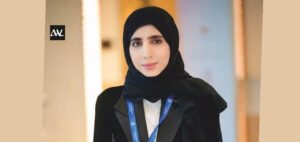
One such guiding light of this global revolution is Delnaaz Panthaki, the Recruitment Section Head at RoyalJet. She possesses rich experience of two decades in the aviation industry. Her professional journey began at a very young age, which was sparked by a deep fascination with service excellence, global cultures, and her desire to travel the world. Delnaaz Panthaki had a humble beginning in her early roles in hospitality, first with the Taj President Hotel and the ITC Grand Maratha Sheraton in Mumbai. It exposed her to the discipline and grace required in customer-facing environments. However, the moment she stepped into aviation as cabin crew with Jet Airways and later as Business Class Cabin Crew with Qatar Airways, she discovered her true passion. “Those early years shaped everything I am today as a leader,” states Delnaaz Panthaki.
Working with 5-star airlines such as Qatar Airways taught her precision, poise under pressure, and the importance of service excellence at an international standard. The multicultural, fast-paced environment demanded empathy, adaptability and strong interpersonal skills. These qualities later shaped her HR leadership style.
When Delnaaz Panthaki transitioned to Air Arabia as a Cabin Manager and Crew Resource Management Facilitator, she experienced leadership for the first time. Managing crew, ensuring safety, mentoring junior members, and handling in-flight challenges made her realize how much she enjoyed nurturing people. This passion ultimately steered her move into HR.
The pivotal moment of her career came when she joined Etihad Airways in 2008. It bridged the two worlds that she loved- aviation and people development. It was an exciting opportunity where Delnaaz Panthaki was able to give back and offer this wonderful opportunity to others who shared the same passion as her. She spent 9 years leading recruitment for cabin crew, food & beverage managers, in-flight chefs, management roles, graduate Emiratisation programs, and global hiring. She gained a full-spectrum understanding of the aviation ecosystem operations, safety, culture, manpower planning, and leadership development.
Aligning Recruitment Priorities with Rewarding Outcomes
Delnaaz Panthaki believes that recruitment in aviation is not simply filling positions. It is about finding the right person for the right job; it is about first and foremost safety, then safeguarding operational continuity, following regulatory compliance and ensuring brand reputation.
“At RoyalJet where we operate in the VVIP charter operator, the stakes are even higher. Every pilot, cabin crew member, engineer, technician, FBO specialist or senior leader we hire represents our commitment to quality and discretion,” she says.
To align recruitment with evolving industry needs, Delnaaz Panthaki pays attention to four main focus areas:
- Workforce Forecasting & Technical Demand Analysis- She works closely with operational leaders- Flight Operations, Engineering & Maintenance, Ground Operations, Commercial, Quality Assurance & Safety and Security to understand fleet expansion plans, regulatory & compliance requirements, license validity, training requirements, specialized skills for VVIP operations, and succession in roles and Emiratisation plan of the organization thus ensuring that the recruitment is proactive and not reactive.
- Digitalisation & Process Enhancement- She spearheaded ATS enhancements and process digitalisation initiatives to shorten hiring cycles, improve candidate experience, ensure regulatory compliance, maintain transparency, and move towards paperless operations.
- Business-Centric Recruitment Strategies- Each segment requires a different approach for the VVIP Pilots & Cabin Crew- a niche sourcing, personalized engagement, competency-based assessments, and cultural fit evaluations. For the Aerospace Engineers & Technicians Delnaaz Panthaki leads targeted campaigns, aviation job boards and technical assessments which are essential skill sets for the role. Her Defense Aviation role with GAL emphasized on military and defense experience sector and on streamlining the approval processes, specializing and validity checking for licenses and platform-based skill requirements. For Corporate & HOD Roles the emphasis is on leadership capability, business acumen and ability to operate in high-stakes environments.
- Stakeholder Alignment
Weekly reviews with department heads and monthly strategic hiring meetings ensure that recruitment priorities mirror operational demands, budget cycles, and strategic direction.
By integrating data, forecasting and close collaboration, recruitment becomes a strategic enabler and a business differentiator.
Bridging the Skill Gap with Efficiency
Over the years, especially across Etihad Airways, GAL and RoyalJet, Delnaaz Panthaki has implemented several innovative strategies:
- Multi-Channel Global Sourcing- She uses a blend of specialized aviation platforms, LinkedIn talent mapping for specialized niche roles, targeted social media campaigns, global hiring events and brand endorsement in industry related events to create a brand impact in the market, thus expanding the company’s reach for the required skill sets.
- Headhunting for Specialized Roles- According to Delnaaz Panthaki, a traditional job posting is not sufficient for VVIP pilots, senior engineers, and defense aviation specialists. She personally headhunts for these niche profiles using market intelligence, her personal aviation network, referrals and targeted outreach to source the right calibre of candidates.
- Talent Pool Creation- She built a talent pool for cabin crew, engineers and technicians, Emirati graduates and C level future leader positions. This talent pool is very helpful in reducing time-to-hire and ensuring effective succession planning.
- Assessment Centers- Drawing from her experience with Etihad Airways, Delnaaz Panthaki has introduced structured assessments that evaluate through competency-based interviews; technical knowledge through an online or in-person technical assessment test, situational judgment, role play scenarios; check the cultural fit to the organisation; and ensure the assessment also evaluates behavioural alignment.
- Recruitment Process Digitalisation- Delnaaz believes that AI is definitely the need of the hour, and each organisation needs to upskill to meet the business needs. In her leadership roles at Khidmah (Aldar), Bloom Education & now at RoyalJet, she led the complete digitalisation of recruitment and onboarding processes. This helped cost-to-hire by 38%, time-to-hire by 22%, reduce the paperwork, and eliminate the manual errors.
- Emiratisation-Driven Strategies- Nurturing the future has always been a priority for all the organizations that Delnaaz Panthaki has had the privilege to be a part of. In Etihad, she led the Graduate Manager Program in her department that helped create pathways for UAE Nationals by collaborating with different universities (HCT & Zayed University), designing graduate programs and initiatives, identifying transferable skills, and helping them redirect in the right direction.
- Workforce Development & OJT Programs- Delnaaz states that RoyalJet offers OJT programmes in various departments that help to upskill pathways to close technical skill gaps for aviation maintenance personnel. These innovations ensure they attract not just talent, but the right talent and support their long-term success. She is also proud to state that RoyalJet emphasises on women empowerment by also providing OJT for our Emirati women and giving them a chance to explore and spread their wings.
A Torchbearer of Gender Equality and Inclusive Opportunity
Gender diversity in aviation cannot rely on policy statements alone. It requires targeted, action-oriented interventions, and Delnaaz Panthaki truly believes a lot more can be done to empower women in this sector. She has been residing in Abu Dhabi for the last 17 years, and it is her second home. Originally hailing for Mumbai, India, she is proud to say that the country holds a remarkable position on the global aviation map with the highest percentage of women pilots in the world over 12%, which is nearly three times the global average of 4 to 5%. This achievement has a direct emphasis on education, ambition and breaking traditional gender barriers.
Yet, while this progress is encouraging, it also highlights how much more the global aviation sector can achieve by creating pathways for women. Empowering more women through mentorship, leadership development, technical training and inclusive policies will not only strengthen workforce diversity but also bring fresh perspectives, resilience and innovation to an industry built on precision and human connection.
Delnaaz Panthaki opines that there must be a visible representation of female role models. Hence, when women see other women in leadership roles, in the cockpit as pilots and first officers, engineering and technical roles, they would be inspired to break barriers and achieve unimaginable professional feats. According to her, it is essential to conduct bias-free recruitment processes using structured interview guides, scorecards and gender-neutral language to reduce unconscious bias. Creating professional routes can have a significant influence since women require training access, mentorship, and clear succession plans in order to anticipate long-term advancement with the support of their peers and family.
She further states, “Provide more flexible work arrangements and family-friendly policies that help retain women in high-intensity roles such as flight operations, rostering, scheduling and engineering where they need to work in shifts and rotations.”
According to her, it is of utmost importance to provide skills-focused hiring opportunities
instead of traditional experience-based screening. Keeping this in mind, she personally promotes transferable skills, allowing women from other fields to also enter aviation. Delnaaz Panthaki is a strong support of mentoring. She personally coaches women, whom she engages with in her network on career development, CV updates, interview skills, and leadership readiness. These interventions create ecosystems where women can rise, succeed and lead with confidence.
Keeping Technology at the Forefront
“AI is the need for the hour and I am always in the search for a tool or resource that can help enhance and improve the candidate experience, has a brand impact on the candidate regardless of the section where they recommend the company to others through their experience and word of mouth, and last but not the least has a cost saving impact on the business by optimizing our time and resources,” expresses Delnaaz Panthaki . Digital transformation demands new skills, new mindsets and new recruitment strategies. Hiring for emerging tech skills, which are data-driven by data analytics and historical data, cybersecurity, AI-driven maintenance, digital operations, and smart fleet management are among her priorities.
Having a robust ATS & HRMS enhancement is vital for any organisation, and she has spearheaded digital HR transformations at Khidmah, Bloom Education. She is working on the same concept for RoyalJet, moving from manual to automated processes.
It is crucial for any organisation to carry out strategic data-driven decision-making. Delnaaz Panthaki had collaborated with IT and the data analysis team at GAL. She designed and helped to provide accurate manpower analytics, thus assisting the team in making new AI dashboards for management review. Delnaaz Panthaki enjoys upskilling her recruitment team and sharing her knowledge and training them with new age tools and access to AI-powered talent search engines, digital/video interviews and guiding them through the competency mapping process. “I also encourage my team in building a future talent pool and partnering with academic institutions to prepare students for the aviation tech landscape. This ensures our workforce is ready not just for today but for the future of aviation”.
Soaring to Newer Heights
Speaking about the future, Delnaaz Panthaki sates, “Aviation is an exciting industry that is ever-changing and transforming with the times. That’s what I love about aviation, that it’s always evolving with the new technology. Hence, recruitment strategies must evolve to remain relevant.”
Moving ahead, she is optimistic about these trends:
- Digitally skilled aviation professionals will be in high demand.
- AI and automation will transform HR and operations.
- Hybrid work models will impact corporate aviation roles.
- Emiratisation and localization efforts will intensify.
- More sustainability-related roles will emerge.
- Soft skills like resilience, adaptability, and cultural intelligence will gain importance.