
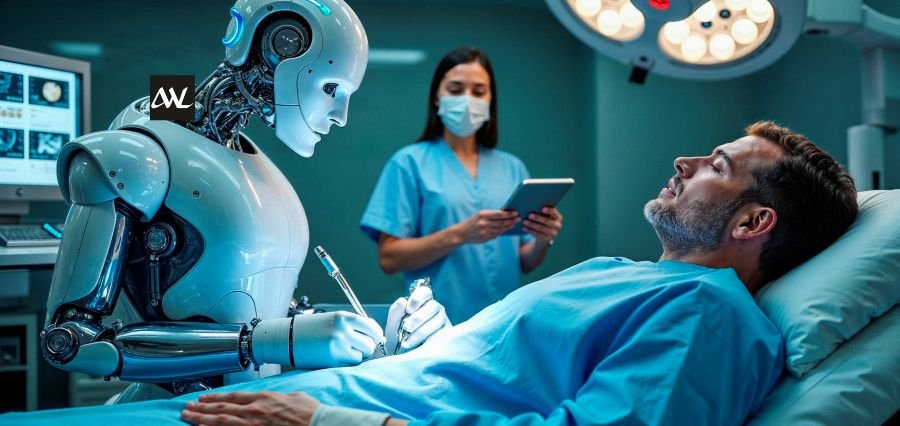
One of the key drivers of the global digital transformation in healthcare is the emergence of innovations that improve patient care, streamline clinical workflows, and enhance operational efficiency. To make the best decisions, provide the most suitable treatment, and broaden the access to healthcare, practitioners are going for the use of artificial intelligence, precision diagnostics, telemedicine, and remote monitoring, among others. Hospitals and clinics, by agreeing to use digital devices as their standard daily work, are moving towards a more coordinated, evidence-based, and patient-centered care model. Patient safety is being improved, clinical outcomes are being enhanced, and the overall quality of healthcare delivery is being elevated as a result of these innovations. The digital transformation is not a concept for the future anymore; it is a reality of today that is changing in a rapid way the manner in which health systems work.
Digital Transformation for Better Care
The Arab world healthcare has been a major example of how the region has quickly embraced advanced technologies. In the region, the digital interventions serve as a model of how they are changing clinical workflows, patient engagement, and operational management. To a great extent, artificial intelligence notions are being employed in diagnostic imaging, predictive analytics, and triage systems, thus, allowing clinicians to arrive at timely and accurate decisions. Healthcare institutions are on the path to implementing electronic health records, cloud-based management systems, and integrated digital platforms that not only make data more accessible but also reduce the administrative workload and facilitate the interaction of the different members of the care team. The technologies have been means for the healthcare sector to come to a level of more coordinated, evidence-based care which, hence, leads to the safety of the patient and the raising of the quality standards of the entire healthcare ecosystem.
As a result of the increased demand for care that is accessible and of a high standard, healthcare providers are resorting to digital means in order to reach remote and deprived populations with their services. Consequently, patients are provided with the means to access healthcare services through virtual visits, online follow-ups, and chronic disease management programs without physical visits to healthcare facilities thus eliminating the problem of distance and logistical barriers. Furthermore, the implementation of wearable devices, internet-enabled diagnostic tools, and home-based monitoring solutions is not only leading to early detection but patients are being given the power to become more active in the management of their health.
Precision Medical Technologies
The Arab region’s healthcare sector continues to be a major stage for introducing revolutionary medical technologies that are leading to more precise, safer, and effective clinical procedures. With robotic surgery systems, doctors are able to carry out complicated operations more accurately, less invasively, and with fewer complications, allowing patients to recover quickly and their general improvement of clinical outcomes. Rehabilitation robots offer the most suitable therapy to patients who have had strokes, injuries, or suffer from neurological diseases, thus helping the regaining of mobility and functional independence.
As a result, these technological advancements serve as examples of how the implementation of automation and engineering is the leading factor in the transition of the present-day clinical care to the future one. There are numerous companies that are introducing high-resolution imaging systems, point-of-care testing devices, and laboratory automation technologies, which enhance both diagnostic accuracy and speed. As a result, doctors are in a position to map out the treatment strategies that will have the maximum effects in cases of cancer, cardiovascular diseases, as well as other rare illnesses. With the help of these instruments, healthcare providers can spot the risks at a very early stage, keep track of disease progress more accurately, and tailor the therapies so that they meet the exact needs of individual patients.
Sustainable Health for Lasting Impact
Sustainability is increasingly defining the healthcare systems that decision-makers look for and want to be in place in the region. The healthcare system in the Arab region is advancing toward the development of systems that are technologically sophisticated, environmentally responsible, and financially sustainable. In addition, the deployment of renewable energy and energy-saving medical equipment, use of laser technology, and the establishment of materials recycling programs are some of the steps being taken to achieve clean, zero-waste hospitals. The transition to paperless operations, supported by the growing use of digital technologies, records, and management systems, is among the healthcare facilities’ efforts to contribute to resource savings and carbon footprint reduction. Together, these efforts contribute to the local and global climate agenda requirements while improving healthcare delivery and cost control capabilities.
Health care in the Arab region is focused on the implementation of environmentally friendly treatment models that ensure the health of the population in the future. These advancements in the healthcare system are made possible through the active involvement of the public and private sectors, along with partnerships and regional initiatives that strengthen capabilities at the local level. Innovation labs, learning networks, and educational programs play a vital role in equipping business leaders and healthcare professionals with the necessary knowledge and skills to lead major changes in the industry. The upgrading of healthcare systems by the virtue of professionals acquiring new skills and the easier use of these cutting-edge solutions not only make the health systems strong and capable of handling future crises, but also, they turn them into systems that can guarantee equitable access to health care of high quality to all human beings.
Conclusion
Continuous digital innovation is transforming healthcare by elevating patient care, advancing precision medicine, and strengthening operational sustainability beyond earlier expectations. Some of the advanced technologies to which the healthcare industry is resorting include robotics, AI-driven diagnostics, telehealth, and complete digital management systems. These technologies are enabling clinicians, improving patient engagement, and facilitating preventive and personalized care. Healthcare systems by implementing eco-friendly and the introduction of new care models are not only managing to maintain their resilience and efficiency but also their ability to meet the needs of the constantly changing populations. In this way, health care providers are paving the way for a future where excellent, affordable, and eco-friendly health care will be the norm by combining technological innovation with sustainability and patient-centered strategies.