
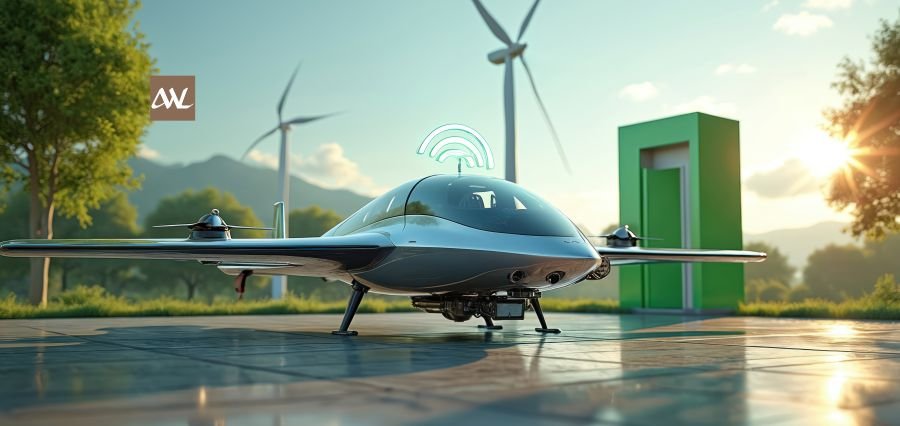
In today’s world, aviation managers operate in an environment that experiences rapid technological growth and regulatory changes and increased demands for sustainable practices. Airport and airline aviation managers must integrate sustainability into their core business activities because organizations today face increased public scrutiny regarding their carbon footprint. The aviation industry is undergoing a leadership transformation because leaders now need to achieve operational efficiency together with their environmental protection obligations. Besides the issues of environmental concerns, aviation managers have the responsibility of ensuring profitability within a very competitive global industry. In response to these issues, managers need to implement the use of data-driven decision-making, which can be supported by highly sophisticated analytics and digital tools to optimize the routes, lowering fuel usage and enhancing efficiency.
Green Innovation
Innovation has become the focus of sustainable air travel, particularly in the development and implementation of cleaner technologies. Aviation managers are vital to the assessment and adoption of sustainable aviation fuel, electric propulsion and hybrid aircraft. Although such technologies are still in their infancy phase, they hold a lot of promise in terms of their ability to cut down greenhouse emissions by a large margin and thus, it is an important area of focus when it comes to long term planning. Managers are required to evaluate the economic viability and scalability of such innovations besides evaluating their environmental benefits.
Teamwork is also a critical element in the process of sustainable development. Aviation managers should collaborate with the manufacturers of aircrafts, fuel companies, government and research institutes to hasten the transition of green technologies. Collaboration helps organizations to achieve common industry standards while supporting research on alternative fuels and constructing new fuel infrastructure. The system empowers aviation managers to drive progress through their work on transforming sustainability projects into wide-reaching solutions which will enhance both environmental protection and industry resilience.
Smart Ops
The digital transformation is changing the ways of managing aviation operations, providing new opportunities to make them more sustainable. Aviation managers are turning to artificial intelligence, machine learning, and predictive analytics to streamline their flight operations, maintenance schedules, and unnecessary fuel burn. There is also the capability of smart systems to process enormous volumes of data instantly, thus allowing managers to make accurate decisions that make them efficient and less harmful to the environment.
Improved air traffic management, flight paths and efficient ground handling processes are also among the operational strategies that lead to sustainability. The aviation managers must ensure that they incorporate these strategies in their everyday operations and at the same time maintain safety and adherence to the regulatory standards. The application of digital twins and simulation tools enables managers to experiment with scenarios and perfect processes prior to implementation which minimizes waste and enhances results. The ongoing technological advancements will require aviation managers to create operational systems that achieve efficient sustainable performance through the use of intelligent systems.
Future Outlook
The aviation industry needs sustainable development to ensure its future, which requires its leaders to achieve equilibrium between operational expansion and environmental conservation. The aviation managers will be required to cope with the tightening regulatory systems and pressure mounting by governments and consumers to minimize emissions. This will involve a proactive strategy and sustainability to be incorporated in all levels of decision making which will include fleet management, route planning and infrastructure investment. Managers who are able to predict regulatory changes and adjust swiftly will have more opportunities of leading their organizations to the sustainable future.
Meanwhile, the industry will have to overcome the financial difficulties related to the shift towards sustainable practices. New technology and infrastructure investments can be quite high, and the managers of the aviation business need to make sure that these investments will have long-term benefits. It is also likely that in the future, the focus will be more on cross-industry collaboration, public-private partnership, and new financing models to fund the sustainability initiatives. With the aviation industry still undergoing development, the role played by managers will determine the future where air transport will not only be efficient and accessible but also in line with the global objectives of environmental conservation.
Conclusion
The aviation managers are leading the industry in the shift to sustainable air travel, where excellence in operations and environmental responsibility should go hand in hand. Their work has also changed to become one requiring strategic attributes, technological flexibility and a firm dedication to minimizing environmental impact in the face of safety and efficiency. They can initiate a significant shift in the ecosystem of the aviation industry by realizing innovation, promoting collaborations, and incorporating sustainability into the fundamental workings. As the industry continues, the choices that aviation managers take will largely determine the level, at which the industry responds to the global climate expectations. Sustainable aviation is not a long-term goal but a short-term concern that needs strong leadership and constant advancement.