
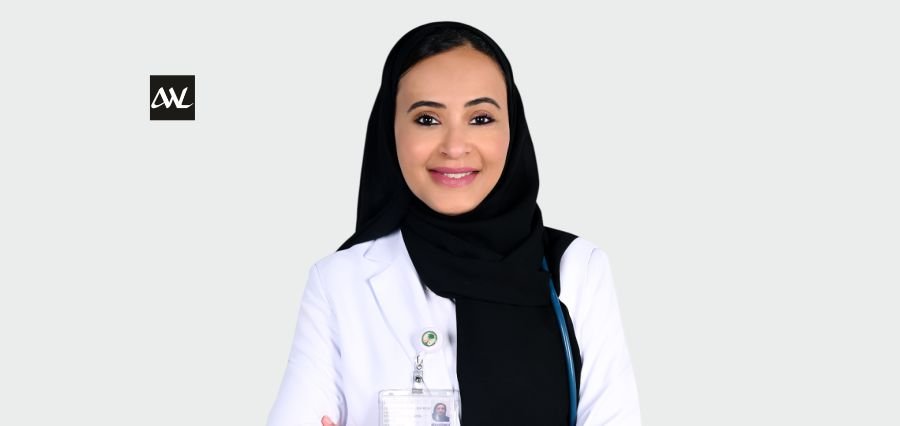
There is a unique type of leadership that not only fearlessly shapes the future but also skillfully handles the high stakes that are currently present in the crucible of transplant medicine, where every choice is vital and the human body is being re-calibrated. In addition to practicing medicine, a new generation of strong Arab women is spearheading this dynamic force by actively advancing clinical science and compassionate strategy. Dr. Reem Almaghrabi, a pioneering physician who has painstakingly crafted a unique and remarkable career in the specialized field of transplant infectious diseases, is at the forefront of this incredible revolution.
Her professional ascent is far more than a resume of achievements; it is a masterclass in focused passion and relentless, purposeful dedication. She embodies a commitment to clinical excellence that transcends the conventional, turning deep ambition into a tangible, life-saving reality. As the Head of Section: Transplant Infectious Diseases at the globally renowned King Faisal Specialist Hospital and Research Center, she actualized her vision: the establishment of the first dedicated Transplant Infectious Diseases Section in Saudi Arabia. Today, this pioneering program serves as a formidable regional beacon for clinical excellence, innovation, and specialized training, anchoring the Arab world as a major force in global healthcare.
The Spark of a Lifelong Commitment
Dr. Almaghrabi’s profound immersion into this intricate specialty began during her formative rotations in infectious diseases at the King Faisal Specialist Hospital & Research Centre. She was instantly captivated by the “invisible war” waged within immunocompromised patients- the dramatically altered behaviour of infections. She quickly grasped that subtle clinical whispers could mask catastrophic, life-threatening complications, and that the delicate thread of patient recovery often hung in the most precise, microscopic details. This intense, early realization was the catalyst, sparking a deep curiosity that rapidly matured into a lifelong, unwavering commitment to decoding the complex triad of host, pathogen, and immunity.
A moment of pure revelation crystallized her career path. Attending a major international infectious diseases conference early in her professional life, she listened as Dr. Nina Singh from the University of Pittsburgh spoke with dazzling clarity about a frequent post-transplant infection. Dr. Almaghrabi was struck by the speaker’s immense depth of knowledge, the surgical precision of her thought, and the deep, unwavering compassion that permeated her entire presentation. It was a pivotal moment where she understood, for the first time, the transformative power of this field and its capacity not only to save individual lives but to fundamentally reshape medical thought at the critical intersection of advanced science and profound humanity. This powerful initial inspiration quickly evolved into a focused mission: to establish and lead a center that would significantly advance care, research, and education for transplant infectious diseases specifically within the Arab region.
The Dual Command: Strategy Meets Clinical Intensity
Leading a medical section grappling with such intricate, high-stakes challenges requires a delicate, powerful balance. It’s a fusion of strategic oversight and moment-to-moment clinical precision. Dr. Almaghrabi expertly manages this demanding dual role, asserting that balancing intense clinical work with strategic responsibilities is built on discipline, crystal-clear clarity, and deep, unqualified trust in her team. In her ultra-sensitive field, clinical decisions must be executed with flawless accuracy, often dictating life or death outcomes within mere hours.
Yet, the demands of leadership compel her to simultaneously maintain a wider perspective. She must step back from the bedside to architect the robust, long-term systems that ensure sustained excellence, designing governance structures, innovative research frameworks, and continuous, strategic mentoring. She skilfully bridges this gap by making strategy an intrinsic part of the daily workflow. Every patient discussion, every committee decision, and every research protocol is meticulously aligned with the institution’s overarching goals of quality, safety, and innovation.
Empowerment: The Signature of Her Leadership
As a highly influential woman leader in the Arab world, Dr. Almaghrabi’s leadership philosophy is powerfully anchored in purpose, radical inclusivity, and shared accountability. She holds the firm conviction that truly great leaders do not merely function as managers; they are profound enablers and empowerers. She has keenly observed that genuine progress in healthcare erupts when every single team member feels truly heard and deeply valued, irrespective of their specific title or specialty.
Her leadership style was profoundly influenced by her institution’s Executive Director at the Organ Transplant Center of Excellence, Professor Dieter Broering, who had the vision to bring all transplantation disciplines under a single, unified structure. Witnessing this multidisciplinary ecosystem firsthand, Dr. Almaghrabi observed how it naturally fostered open dialogue and deep mutual respect. She saw the undeniable power of collaboration. Surgeons, infectious disease physicians, nephrologists, immunologists, and rehabilitation experts, when encouraged to freely exchange divergent ideas, achieved dramatically superior patient outcomes than any one specialty could possibly realize alone. Today, she meticulously recreates that synergistic, collaborative environment in every initiative she spearheads. By actively integrating diverse perspectives and insisting on transparent, open communication, her team not only significantly elevates patient care but also cultivates a dynamic culture of continuous learning and deep collaboration that is the very engine of their success.
The Humane Compass: Empathy as a Pillar of Practice
In the emotionally charged world of transplant medicine, patients entrust their physicians with the immense gift of a second chance at life. Dr. Almaghrabi finds this profound trust to be both deeply humbling and fiercely motivating. When patients and their families look to her with hope, it is a constant, powerful reminder that medicine is fundamentally about humanity, transcending the mere application of science. She speaks of her patients as profound teachers, demonstrating resilience, patience, and faith. Their extraordinary courage in the face of uncertainty inspires her to relentlessly exceed their expectations every single day.
This deep-seated sense of human responsibility shapes her approach to both clinical practice and strategic leadership. It is the force that propels her team to continuously sharpen their knowledge, aggressively invest in clinical innovation, and never lose sight of the unique individual standing behind the medical diagnosis. At its core, Dr. Almaghrabi believes empathy necessitates being completely and genuinely present. It means listening intently to patients, acknowledging their fears, and committing to walking beside them through the most vulnerable and critical moments of their lives. This human connection is the fuel that sustains their collective purpose and permanently anchors compassion at the very heart of their work.
Shattering Glass Ceilings in Specialized Medicine
When Dr. Almaghrabi first entered her field, female role models were conspicuously absent. She faced immediate hurdles: institutional inertia, existing cultural expectations, and the persistent pressure to constantly validate her competence in professional spaces historically not designed for women. Like many pioneering women in medicine, she understood the implicit requirement to work twice as hard just to secure a voice and unequivocally prove that true expertise and leadership are genderless.
Her strategy for overcoming these structural challenges was simple and powerful: an unrelenting focus on outcomes. She chose to let her consistently high performance, unshakeable integrity, and sheer persistence speak far louder than any pre-existing perception. She observes that over time, consistent, measurable results build undeniable credibility, and that credibility is the ultimate currency of influence. Simultaneously, she gratefully acknowledges the strong, proactive support she received from her institution. Her Executive Director and hospital leadership consistently prioritized recognizing merit and potential above gender, creating a nurturing ecosystem where women could confidently step into leadership roles. This crucial internal support has been massively reinforced by the national movement of Saudi Vision 2030, which powerfully enshrines women’s empowerment as a core pillar of national progress. This monumental shift has thrown open doors, instilled deep confidence, and definitively shown an entire generation of women that leadership in highly specialized healthcare is not only attainable but essential for the nation’s future.
Resilience Forged Under Pressure
The transplant setting is inherently a high-pressure crucible, demanding swift, authoritative decision-making. Dr. Almaghrabi views resilience not as an innate quality, but as a finely honed skill; one that is carefully constructed through rigorous preparation, extensive experience, and a powerful shared sense of purpose. Since every decision carries a potentially life-altering weight, her team proactively prepares for crises long before they emerge, utilizing structured protocols, sophisticated multidisciplinary simulations, and mandatory, regular team debriefings. When a critical moment arrives, every member instantly knows their precise role, allowing them to execute with confidence and seamless coordination, rather than succumbing to panic.
Her extensive training at the University of Pittsburgh, a global epicenter for transplantation, was a pivotal experience in shaping her approach to stress management. There, she mastered not only the advanced science of infectious diseases in complex transplant settings but also the indispensable discipline of structured, clear-headed thinking under extreme duress. The exposure to that rigorous and fast-paced environment instilled a deep, enduring sense of resilience- the ability to stay calm, execute sound clinical judgments, and lead with unwavering clarity, even in the deepest moments of uncertainty. She cherishes that experience, as it taught her that resilience is not the absence of stress, but the powerful ability to discover strength and purpose within the stress itself. Within her own team, she consciously cultivates this exact mindset, promoting psychological safety, open communication, and absolute shared accountability. By ensuring that everyone, from the newest fellow to the senior consultant, understands their input is vital, this culture of mutual trust and unity allows the team to navigate the most challenging situations with professionalism, profound empathy, and grace.
Mentorship and Globalizing Regional Excellence
Dr. Almaghrabi views mentorship as a sacred and necessary act. It’s a responsibility and a profound privilege. She makes a deliberate effort to guide young women physicians, teaching them far more than just clinical skills. Her mentorship is strategically focused on developing strategic thinking, iron-clad self-confidence, and lasting resilience. Through the Transplant Infectious Diseases Fellowship Program, a groundbreaking initiative as the first of its kind in the Middle East, she witnesses firsthand the transformative power of structured guidance, watching potential turn directly into powerful leadership. Her message to these emerging leaders is clear, concise, and incredibly potent: “Your voice matters, your ideas matter, and the Arab world needs your leadership”.
Her long-term vision is a bold declaration of regional ambition: to decisively position the Arab world as a net global contributor to transplant medicine, moving beyond the role of merely importing international knowledge. She vividly envisions a powerful regional network that seamlessly integrates data-driven surveillance, cutting-edge clinical innovation, and localized genomic research to create transplant infectious disease care that is meticulously tailored to the region’s unique epidemiological profile. Leadership, she asserts, will be the vital catalyst for this transformation, creating sustainable ecosystems where advanced science, decisive policy, and profound compassion perfectly intersect, ensuring that excellence is firmly embedded and sustainable across multiple generations.
The Ultimate Reward of Service
For Dr. Almaghrabi, every professional milestone, from the complex case successfully managed to the critical policy approved, represents a collective, unified effort. Recognition holds deep meaning for her, not for the personal title it confers, but because it powerfully reflects the collective progress of an entire, once-overlooked field. To be celebrated among the pioneering Arab women leaders is the clearest sign that the professional path she tirelessly paves today makes the entire journey easier and more accessible for those who will inevitably follow. That, she concludes, is her greatest and most fulfilling reward.