
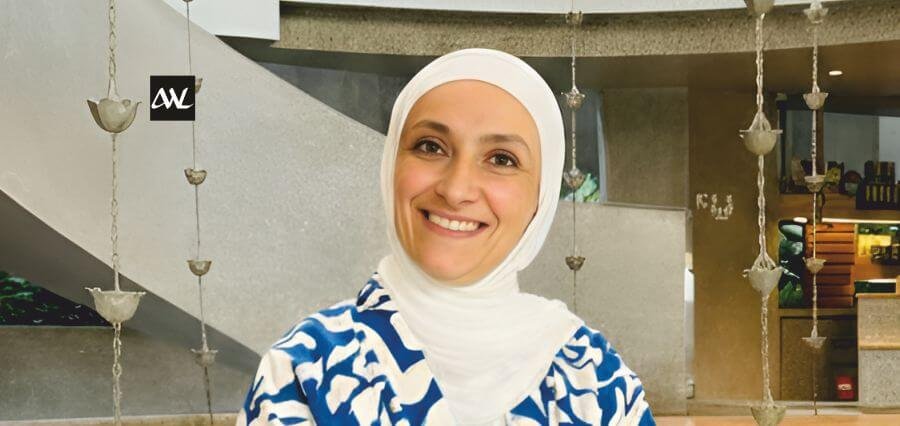
In a rapidly evolving era defined by artificial intelligence, digital transformation, and ambitious national visions, the Middle East stands at a turning point in reimagining how its youth learn, innovate, and lead. At the heart of this movement is Ms. Kharouf, a passionate math and science educator, STEM-certified leader, and influential AI educator whose work is reshaping classrooms across the UAE.
What began as deep concern for exhausted teachers and disengaged students has evolved into a mission that touches classrooms, educators, families, and entire school communities. Her leadership today symbolizes a shift in the region: a recognition that AI, STEM, and 21st-century learning can only succeed when they elevate human well-being—not replace it.
“For me, STEM and AI are not trends—they are the language of the future. When we empower educators to use these tools with purpose and heart, we empower the UAE to continue leading with innovation, humanity, and vision,” she affirms. This purpose anchors every workshop, coaching session, and training program she leads.
The Leader Who Listens
Leadership for Ms. Kharouf begins with empathy. During her years as a math and science leader in Abu Dhabi schools, she watched dedicated educators become increasingly overwhelmed by lesson planning, grading, and data requirements. She recognized that teachers’ emotional well-being was diminishing under mounting expectations, and students were losing opportunities for meaningful engagement.
She answered by making connection, trust, and emotional safety the most important parts of her leadership. She built a culture where teachers felt seen and valued as human beings first, educators second. Before discussing strategies or curriculum, she listened deeply to their challenges, checked in on their well-being, and created a family-like team environment where everyone felt supported.
“I’ve made it my mission to bridge the gap between innovation and well-being so both educators and students can thrive in the age of AI,” she says. This philosophy shapes her every training session, workshop, and mentoring conversation.
This relationship-centered approach earned her the trust of teachers who once felt overwhelmed or isolated. As she often reminds her teams, “Leadership is not about titles; it’s about impact. When educators feel confident and supported, students naturally flourish.”
It is this ability to listen first and lead with heart that sets the foundation for the transformative innovation she brings into classrooms across the UAE.
Training Teachers to Reclaim Their Craft
As AI began to emerge across the education landscape, many teachers felt unsure, hesitant, or even intimidated by its rapid growth. Instead of presenting technology as something to fear, Ms. Kharouf introduced it as a powerful ally—one that could help teachers reclaim their time, creativity, and confidence. She recognized that educators were not averse to innovation, but somewhat fatigued. What they needed was support, clarity, and a renewed sense of purpose.
Through her specialized AI-in-education training programs, she shows teachers how artificial intelligence can streamline planning, reduce workload, and create space for meaningful classroom connections. She guides them step by-step through tools such as MagicSchool AI, Brisk Teaching, Canva Magic Studio, EduAI, and SchoolAI, demonstrating how these platforms can instantly generate differentiated worksheets, CCSS-aligned math lessons, NGSS-aligned science investigations, assessment rubrics, reading passages, and bilingual content.
“I teach educators to let AI handle repetitive tasks so they can focus on what humans do best—connecting, inspiring, and understanding students,” she emphasizes. This mindset shift is at the heart of her workshops, easing teachers’ fears and helping them see AI not as a threat but as a partner that enhances their humanity rather than replacing it.
One of her most impactful sessions involved demonstrating how AI could generate an entire Grade 4 STEM cycle on water sustainability—complete with inquiry questions, hands-on engineering challenges, assessment criteria, and SDG 6 alignment—in a matter of minutes. Teachers who once spent hours preparing a single unit suddenly saw how AI could lighten their load and reignite their creativity.
Her guiding belief is transformative yet straightforward: when teachers are freed from administrative burdens, they regain the energy and inspiration needed to build strong relationships with students and deliver authentic, engaging learning experiences.
Her guiding belief is transformative yet straightforward: when teachers are freed from administrative burdens, they regain the energy and inspiration needed to build strong relationships with students and deliver authentic, engaging learning experiences.
Building a Community of Practice
True educational transformation is never a solo effort—it grows through collaboration, shared purpose, and the belief that every educator has something valuable to contribute. Throughout her leadership journey, Ms. Kharouf has focused on building thriving communities of practice where teachers feel empowered to learn from one another, take risks, and celebrate progress together. She understands that innovation becomes sustainable only when teachers feel connected, supported, and united by a common vision.
“Leadership is not about titles, it’s about impact. When educators feel confident and supported, students naturally flourish,” she states. This belief drives every professional community she nurtures.
As a Math & Science Lead, she facilitated weekly team planning sessions that encouraged open dialogue, reflection, and shared decision-making. She guided educators in co designing interdisciplinary units, building digital resource libraries, analyzing student work collectively, and integrating AI tools in ways that lifted their confidence rather than adding pressure. Teachers were encouraged to bring their ideas, questions, and concerns without fear of judgment—creating a culture where learning was collaborative rather than competitive.
Her commitment to community extended beyond staff rooms and into the heart of the school. She planned and organized STEM Festivals, Sustainability Days, and AI Innovation Events that brought teachers, students, and parents together. Students proudly presented engineering prototypes such as erosion models, solar ovens, earthquake resistant structures, water pipeline systems, and floating gardens inspired by the UAE’s mangrove ecosystems. These events did more than showcase student creativity—they strengthened teacher unity and inspired educators to continue experimenting with hands-on, inquiry-driven learning.
In every initiative she leads, Kharouf’s message remains consistent: when teachers work together, share expertise, and feel genuinely supported, the entire school transforms—and students benefit the most.
The Mentor Who Models
Authenticity has always been at the heart of Ms. Kharouf leadership. Unlike traditional leaders who teach from a distance, she leads by example—inviting teachers into her own learning journey and showing them that growth is a process, not a performance. She openly shares her early uncertainties with AI tools, her experiments with new STEM methodologies, and the moments where she, too, felt overwhelmed by rapid change. This transparency makes her mentorship deeply human and encourages educators to embrace innovation without fear.
“I see leadership as a ripple effect; by inspiring one educator, we can influence hundreds of students, families, and communities,” she reflects. This belief shapes the way she mentors teachers—one conversation, one coaching session, and one workshop at a time. She understands that every empowered teacher becomes a source of inspiration for the next generation, creating waves of impact that extend far beyond classroom walls.
Her mentorship is significant for women in STEM. By modeling confidence, courage, and curiosity, she empowers female educators to step into leadership roles, pursue AI certifications, lead innovation committees, and design project-based learning experiences that ignite student creativity. She showcases real examples of her female students building water filtration systems, coding robots, engineering prosthetic limbs, designing climate-action posters with AI tools, and presenting sustainability solutions aligned with UAE priorities.
Her message to women educators is clear and powerful: “We are the mentors, innovators, and bridge-builders connecting AI innovation with classroom realities,” she explains.
This statement encapsulates her belief that educators—especially women—play a vital role in shaping a future where technology amplifies humanity rather than replacing it. She consistently reminds teachers that their voices, ideas, and presence in STEM fields are essential to creating diverse, empowered, and future-ready learning communities.
By modeling curiosity, empathy, and resilience, Ms. Kharouf shows teachers what leadership looks like in action. She does not merely teach innovation—she embodies it, inspiring everyone around her to lead with both heart and vision.
Teaching Ethical Implementation
While artificial intelligence offers remarkable opportunities for efficiency and creativity, Ms. Kharouf is committed to ensuring that its implementation remains grounded in ethical practice. She believes that AI must always be used to enhance—not replace—the human elements of teaching and learning. In every workshop, she dedicates time to discussing responsible use, accuracy, bias detection, source verification, and digital integrity.
“AI can write, calculate, and organize, but only humans can imagine, empathize, and inspire,” she tells educators and students in her training sessions. This message has become one of her guiding principles, reminding every learner and teacher that technology is a tool, not a replacement for human purpose.
She trains educators to examine AI-generated content critically, ensuring that materials are accurate, inclusive, and respectful of cultural context. She also equips them with strategies to teach students about digital citizenship—helping young learners understand how algorithms work, why data privacy matters, and how to question and evaluate information thoughtfully.
Her commitment to ethical practice extends into the classroom. In a climate-awareness design project she facilitated, students used iPad applications and AI-image tools to create posters highlighting environmental issues in the UAE. Before generating their visuals, she led reflective conversations about representation, cultural perspective, and the responsibility they hold when communicating ideas to their communities. Through this work, students learned not only how to use technology but how to use it ethically, creatively, and purposefully.
Under her guidance, AI becomes more than a digital assistant—it becomes an opportunity to teach empathy, responsibility, and mindful innovation.
Guiding Real-World Application
For Ms. Kharouf, STEM education must move far beyond activities and memorized concepts. She champions a model of learning rooted in real-world relevance, hands-on experimentation, and authentic problem-solving. Her vision is clear: students must be creators, designers, and thinkers who use their knowledge to address meaningful challenges within their communities.
“Students learn that STEM isn’t just about formulas, it’s about solving real problems for real beings,” she explains. But first, educators need to believe in and understand this approach—which is precisely what her coaching provides. She guides teachers through the whole engineering design cycle, showing them how to transform lessons into inquiry-driven investigations that mirror the scientific and engineering practices used in the real world.
Under her mentorship, classrooms have become vibrant spaces of exploration where students engineer prosthetic limbs for injured animals using recycled materials, build solar ovens to study heat transfer, construct earthquake resistant homes inspired by global architectural strategies, and design erosion-prevention models that mirror the UAE’s environmental landscape. Students have also created smart irrigation systems, water filtration prototypes aligned with SDG 6, floating garden models inspired by mangrove ecosystems, and sustainable energy-transfer devices using everyday materials.
These activities not only strengthen scientific understanding but nurture empathy, creativity, and resilience. Teachers consistently report that students become more motivated and confident when they see how their learning connects to real-world issues—especially those linked to the UAE’s sustainability priorities and the global SDGs.
Through this work, Ms. Kharouf helps educators recognize that STEM is not a subject—it is a mindset. By guiding teachers to embed real-world challenges in their lessons, she empowers them to develop students who think critically, innovate boldly, and see themselves as contributors to their communities.
Aligning with National Vision
What distinguishes Ms. Kharouf’s work is its deep alignment with the UAE’s forward-thinking educational and national strategies. She understands that integrating AI, STEM, and future-ready skills is not simply a matter of classroom innovation—it is central to the country’s long-term vision for global competitiveness, sustainability, and human capital development.
“Implementing AI and STEM in education is not just an academic goal; it’s a national responsibility. As educators, we’re helping realize the UAE’s dream of becoming a global leader in innovation, research, and human capital development,” she emphasizes to the educators she trains.
This conviction shapes every training session she delivers. She ensures that teachers understand how their everyday activities—such as creating a STEM challenge, using AI in a lesson, or helping students with an engineering project—help achieve the UAE Vision 2031, the Artificial Intelligence Strategy 2031, and the goals of UAE Centennial 2071.
Her workshops regularly incorporate lessons and projects linked to UAE priorities: sustainability, digital literacy, computational thinking, and innovation-driven economic growth. Through NGSS-aligned engineering tasks, SDG based science projects, and AI-supported creative problem solving, students begin to see themselves as contributors to their country’s future—not merely learners fulfilling assignments.
Teachers frequently share that her approach helps them view their work with renewed purpose. Under her guidance, they recognize that they are not simply delivering curriculum—they are shaping future engineers, scientists, innovators, policymakers, and ethical leaders who will carry the UAE into its next era of advancement.
By grounding her educational leadership in national vision, Ms. Kharouf ensures that every classroom she touches becomes a space where the UAE’s future is imagined, nurtured, and built.
Sustaining Momentum Through Support
Innovation in education cannot flourish without ongoing encouragement, meaningful follow-up, and a leader who understands that real transformation requires time, patience, and emotional support. Ms. Kharouf is known for her unwavering commitment to staying connected with the teachers she trains long after the workshop ends. She checks in regularly, reviews lesson plans, answers questions, and provides guidance as educators navigate new tools, new strategies, and new expectations. Her presence offers reassurance—a reminder that they are not alone in this journey.
Her educator-centered leadership is grounded in a deep belief that empowered teachers create empowered students. She advocates for teacher well-being, encourages healthy work–life balance, and models empathy in all her interactions. She knows that teachers cannot inspire if their own passion has faded, which is why she prioritizes emotional support as much as professional development.
“Seeing educators regain their spark and students fall in love with learning again, that’s my daily motivation,” she says. This educator-centered approach sets her leadership apart in a field often dominated by technology first thinking. For her, innovation is not about flashy tools or trends—it is about the lived experience of teachers and students, and ensuring that change feels supportive, human, and meaningful.
Under her guidance, educators rediscover their confidence. They look at AI not with fear, but with curiosity. They approach STEM not as a rigid set of activities, but as a pathway to creativity and discovery. And most importantly, they begin teaching with renewed passion—knowing they have a mentor who believes in them and walks beside them.
Through this sustained support, Ms. Kharouf cultivates long-term transformation rather than temporary enthusiasm, ensuring that innovation becomes a lasting part of school culture.
A Vision of Empowered Educators
Looking toward the future, Ms. Kharouf imagines classrooms where AI serves as a partner in creativity rather than a director of instruction, where lessons are co-designed between teachers and intelligent tools, and where students use technology to explore, inquire, and innovate. In her vision, learning environments shift from rigid structures to dynamic ecosystems filled with collaboration, curiosity, and purpose. Students engage with AI to simulate experiments, explore sustainable solutions, create digital prototypes, and lead initiatives that respond to the real needs of their communities.
“The Middle East’s AI future will thrive when classrooms become spaces of creativity, equality, and global-minded problem solving. Educators are the key to making that happen,” she states. As a leader, coach, and mentor, she dedicates herself to forging that key, one educator at a time. She believes deeply that teachers are not just facilitators—they are architects of the future, shaping the thinkers, innovators, and leaders who will define the next era of progress in the region.
Her vision extends beyond the integration of tools and strategies; it reflects a deeper commitment to building classrooms where every child feels empowered to question, imagine, and contribute. She hopes to cultivate a generation of empathetic innovators—students who combine technical excellence with ethical awareness, creativity with compassion, and problem-solving with purpose.
Ultimately, Ms. Kharouf envisions an educational landscape where technology amplifies humanity, where teachers are valued for their wisdom and creativity, and where learning becomes a joyful, transformative experience. In every workshop she leads and every educator she mentors, she plants a seed of possibility one that grows into classrooms filled with confidence, curiosity, and hope.