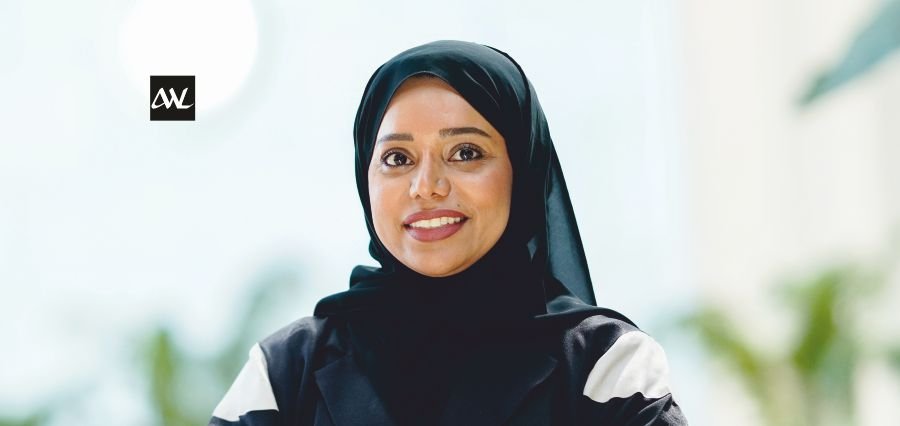
While many leaders detect complexity in their organizations, Amal Al-Farsi sees urgency for change. Her work begins when the doctor’s prescription ends. In her role as the Manager of Health and Wellness Education at Sidra Medicine, Amal is leading an important cultural shift from health care as a service to health care as a partnership, and it all starts with health literacy, an area of expertise that Amal has cultivated as a physiotherapist over the years- that fabricates true healing with an informed, engaged patient, instead of a passive patient. In Qatar’s expanding system, Amal is re-inventing excellence in clinical practice by equally communicating a rise in clinical practice improvement alongside a rise in a patient’s agency. She believes the best health systems can mobilize not only excellence in clinical practice but both a patient empowered and a patient engaged in their care.
A Foundation Built on Purpose and Principle
Amal’s journey into healthcare leadership began long before she stepped into any formal role. She traces the roots of her commitment to a source closer to home: her father, whose influence shaped her understanding of what it means to lead with vision, empathy, and unwavering integrity. Watching him throughout her early life, she learned lessons about responsibility and service that would later define her career path. This early foundation instilled in her a sense of purpose that preceded any professional title.
Her formal entry into healthcare came through physiotherapy, a field she chose deliberately. She completed her bachelor’s degree in physiotherapy from Jordan University of Science and Technology, grounding herself in the authenticity of patient care and its direct impact on health outcomes. For nearly a decade, she worked in clinical settings alongside multidisciplinary teams, years that proved transformative in ways she could not initially predict.
Those clinical years opened her eyes to dimensions of health that extend far beyond diagnoses and treatment plans. She encountered the emotional weight patients carry, the social factors that shape their healthcare experiences, and the complex realities that influence their decisions. She witnessed the strengths of healthcare systems, but also identified critical gaps, particularly around patient adherence, decision-making, and navigation through complicated healthcare processes. These observations planted seeds that would eventually bloom into her current mission.
Expanding the Lens
Recognizing that clinical expertise alone could not address the systemic challenges she observed, Amal pursued a master’s degree in healthcare management at the Royal College of Surgeons in Ireland. This decision reflected her growing awareness that effective healthcare requires understanding not just what decisions are made, but how, when, and why they happen. The program broadened her perspective, allowing her to see healthcare systems from administrative and strategic viewpoints that complemented her clinical foundation.
Yet even with this expanded knowledge, she felt something was missing. Understanding both the clinical side and the administrative side was not enough. The patient’s perspective, the lived experience of navigating healthcare, remained a puzzle piece she needed to complete the picture. This realization led her to pursue a post-diploma in patient education, a choice that would fundamentally reshape her approach to healthcare.
The program delivered insights that connected directly to her clinical experiences. She came to understand that many barriers patients face are not rooted in reluctance or non-compliance, but in systemic challenges that make their health journeys unnecessarily complicated. The coursework deepened her understanding of health-related behaviour, communication patterns, and the complex factors affecting patient and family adherence.
The Moment of Clarity
During her studies, one particular lesson struck with the force of revelation. While learning about factors that affect patient and family adherence, Amal found herself reflecting on her clinical past with new eyes. She suddenly remembered a mother who had brought her child with moderate cerebral palsy to physiotherapy sessions faithfully, despite constant discouragement from her family. The woman had once confided, “I know this helps my child, even if they don’t believe it.” At the time, Amal had not fully grasped the weight of those words. The woman eventually stopped coming.
Now, armed with knowledge about support systems and their critical role in adherence, Amal understood what had happened. That mother had been fighting not just for her child’s physical recovery, but against an entire social ecosystem that doubted her judgment. The realization was both painful and illuminating. It crystallized her purpose: to become a patient advocate and contribute to healthcare systems that truly support patients and their families, making care accessible, understandable, and effective.
Leadership Grounded in Empathy
Today, as a manager at Sidra Medicine, Amal leads with a philosophy shaped by those formative experiences. She strives to create environments where her team feels psychologically safe, where they can speak openly, acknowledge mistakes without fear, and trust that their voices genuinely matter. At the same time, she brings strategic thinking and values structure, clarity, and operational excellence. She works closely with her team to ensure their efforts remain purposeful, accountable, and aligned with organizational goals.
For Amal, empathy and efficiency are not opposing forces but complementary strengths. When people feel supported and valued, performance improves naturally. When processes are clear, stress decreases and engagement rise. She recalls a moment when a team member failed to follow expected professional processes on a project. Instead of assigning blame, she treated it as an opportunity for learning and resilience-building. That experience reinforced her belief that empathy is not weakness, but a catalyst for excellence.
She acknowledges that she is still evolving in mastering this balance. Each day, she chooses to lead with compassion while maintaining excellence as a non-negotiable standard. This approach creates a culture where growth and accountability coexist, where mistakes become stepping stones rather than stumbling blocks.
A Vision for Healthcare Excellence
Amal’s vision extends far beyond her department or even her organization. She is working toward advancing healthcare across Qatar and the broader region, not only by improving systems and structures, but by empowering individuals to take ownership of their health. A core element of this vision involves building a health-literate society where people can understand medical information clearly, ask questions confidently, and participate meaningfully in decisions about their health.
She envisions Qatar as a global leader in healthcare excellence, a goal she believes is entirely achievable through strategic investments in quality improvement, patient engagement, innovation, and continuous development of the healthcare workforce. What motivates her daily is the knowledge that every action, no matter how small, creates ripple effects. Stronger systems lead to better communication, which improves patient experiences, which in turn strengthens families, builds healthier communities, and elevates the nation’s overall well-being.
Lessons from Crisis
The pandemic underscored a critical truth that has shaped Amal’s leadership approach: health literacy is a necessity, not an option. Limited understanding of health information led to fear, misinformation, delayed care, and preventable complications. Many individuals avoided hospitals or misunderstood preventive measures simply because information was not clear or culturally accessible.
This experience shaped her leadership in two major ways. First, she prioritized health literacy as an organizational competency, not just a program or initiative. Second, she advocated for clear, culturally relevant communication across all services. Following the pandemic, her team built an online health information library to provide accurate and accessible educational materials. Within months, they saw strong engagement from patients and the wider community, proof of the need for trustworthy and understandable information.
The pandemic reminded everyone that strong healthcare systems rely not only on clinical excellence but on informed and empowered communities. This lesson continues to guide Amal’s work and strategic priorities.
Daily Habits, Lasting Impact
Amal’s personal values revolve around continuous self-development, developing others, and sharing knowledge. She believes that knowledge becomes meaningful only when it contributes to someone else’s growth. One habit that anchors her leadership is dedicating time each week to learning, whether through reading, training, or engaging with other leaders. This practice keeps her grounded, curious, and open to new ideas.
Inside and outside the workplace, she naturally gravitates toward mentoring and supporting others. This philosophy shapes the environment she creates as a leader: one centered on collaboration, respect, learning, and collective progress. She does not compartmentalize her values, separating professional conduct from personal beliefs.
Instead, she brings her whole self to her work, creating authenticity that resonates with her team and the people they serve.
Building Sustainable Systems
Amal is deeply committed to building a health-literate culture across her organization and the entire country, over the years, Amal has observed meaningful adoption of health literacy principles among clinical teams. This shift has improved patient and family engagement and contributed to better results throughout the system. For Amal, health literacy is not just an educational initiative but a long-term sustainability strategy that enhances efficiency, safety, and performance at every level.
This approach reflects her understanding that sustainable healthcare requires more than clinical excellence. It requires systems that empower every person who touches them, from healthcare providers to patients and families, creating cycles of improvement that compound over time.
A Message for the Future
When Amal reflects on her journey, her message to the next generation is both simple and profound. To every young woman with a dream, she says: Leadership requires determination, courage, and consistent hard work. Stay committed to your purpose, remain open to learning, and trust in your abilities. Challenges will come, but they are stepping stones, not barriers.
She urges emerging leaders to believe in their ability to shape change, create opportunities, and leave meaningful legacies. The Arab world, she notes, is full of talented, visionary women. The future belongs to those who choose to lead with strength, clarity, and unwavering purpose.
The Ripple Effect
Today, as Amal continues her work at Sidra Medicine, her impact extends far beyond metrics and statistics. She is changing how healthcare systems view patient engagement, how teams approach communication, and how communities access the information they need to make informed decisions about their health. She is building bridges between complex systems and human understanding, between clinical excellence and compassionate care.
In a field often dominated by discussions of budgets, technologies, and efficiency metrics, she keeps the focus where it belongs: on the people healthcare exists to serve. Her leadership reminds us that the most sophisticated healthcare systems in the world mean nothing if patients cannot understand them, navigate them, or trust them.
As Qatar continues its journey toward becoming a global healthcare leader, voices like Amal’s ensure that progress remains grounded in purpose, that innovation serves humanity, and that every advancement brings communities closer to the vision of healthcare that truly heals. Her story is not just one of personal achievement but of transformation that touches every patient, every family, and every community that benefits from systems built on understanding, empowerment, and unwavering commitment to human dignity.
In the end, Amal’s legacy will not be measured in programs launched or policies implemented, but in the countless moments when patients understood their diagnoses, asked questions confidently, and took ownership of their healing journeys. It will live in the healthcare professionals she has mentored, the systems she has strengthened, and the culture of compassion and excellence she continues to build, one conversation, one decision, one patient at a time.
Read Also : Aisha Al-Zaabi: Redefining Information Literacy for the AI Age