
Lecture halls around the world are seeing the rise of a silent but difficult problem. Students can find answers in milliseconds thanks to smartphones, but they are increasingly struggling to distinguish fact from fiction. They swim in shallow waters of misleading information while navigating oceans of data. While AI chatbots provide instant essays and search engines promise knowledge at their fingertips, what is the cost of critical thinking? Our digital age is typified by this paradox: we have democratized access to information while unintentionally weakening our capacity to assess it.
The solution doesn’t lie in rejecting technology or retreating to pre-digital pedagogy. Instead, it emerges from a more nuanced understanding- that the tools reshaping education demand a fundamental reimagining of how we teach students to think. Somewhere between blind acceptance of AI-generated content and fearful rejection of innovation exists a pathway forward, one that honours both technological possibility and intellectual rigour. This pathway requires educators who speak both languages fluently: the traditional grammar of academic inquiry and the evolving syntax of artificial intelligence.
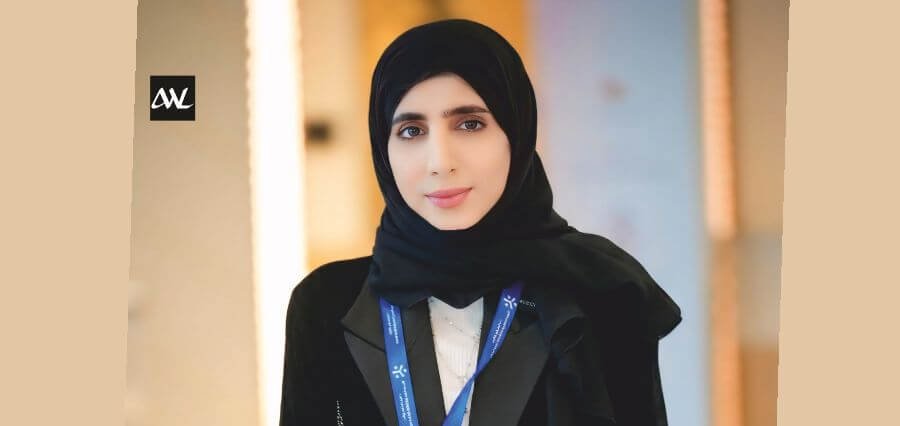
At Sohar University, where Oman’s industrial future meets its educational ambitions, one professional embodies this dual fluency. She is Aisha Al-Zaabi, an Information Specialist. She doesn’t simply update library orientations for the digital age. She architects frameworks where centuries-old principles of scholarly scepticism merge seamlessly with cutting-edge verification tools. Her work transforms information literacy from a checkbox on academic requirements into a living, breathing competency that evolves alongside the technologies threatening to disrupt it.
Where Technology Meets Teaching
Aisha’s journey into this intersection began not with algorithms or artificial intelligence, but with observation. Working in academic library environments, she watched patterns emerge- students struggling to locate credible sources, researchers unaware of scholarly communication norms, learners confused about evaluating what they found online. Each interaction revealed a deeper truth: access alone doesn’t equal understanding.
Her educational background positioned her uniquely to address these challenges. She holds a Master’s degree in Computer Science and a Bachelor’s degree in Information Systems, complemented by a Diploma in Information Communication Technology. Her affiliation with the University of Missouri-St. Louis expanded her perspective beyond regional boundaries, exposing her to international approaches to information literacy. This combination, technical expertise meeting educational insight, became her foundation.
She recognized early that the recurring challenges she witnessed weren’t isolated incidents but symptoms of a fundamental shift. As information moved from physical repositories to digital networks, from carefully curated collections to algorithmically generated feeds, the skills required to navigate it transformed completely. Traditional library instruction couldn’t address these new realities. Students needed something more comprehensive, more adaptive, more alive to technological change.
This realization drove her toward advanced studies that would allow her to integrate emerging technologies with information literacy instruction. She believed deeply that technology could enhance learning rather than undermine it, but only if educators actively shaped how students engaged with these tools. This conviction became her professional north star.
Redefining a Role for the AI Era
When artificial intelligence began permeating academic spaces, Aisha’s role at Sohar University underwent a natural metamorphosis. The transformation went beyond adding new topics to existing workshops. It required fundamentally reconceptualizing what information literacy means in an age where machines generate convincing but potentially fabricated content.
Traditional orientations once focused on straightforward skills: navigating databases, constructing citations, and understanding call numbers. She maintains these foundations, but now weaves them into a far richer tapestry. Her programs blend classical competencies, critical evaluation, proper referencing, strategic research planning, with emerging necessities like recognizing algorithmic bias, verifying AI-generated content, and using intelligent search tools responsibly.
Her responsibilities expanded accordingly. She advises faculty on embedding information literacy outcomes into their curricula, ensuring these skills integrate across disciplines rather than remaining siloed in library sessions. She develops institutional guidelines around ethical AI use, creating frameworks that balance innovation with integrity. She supports researchers applying information literacy principles to advanced projects where AI tools play increasingly central roles.
The University recognized her contributions through the VC Outstanding Achievement Award, validating her approach. Under her guidance, information literacy evolved from a support service into a strategic educational priority. Sohar University’s world-class Learning Resources Centre, positioned at the heart of campus, provides the ideal venue for her transformative work.
Understanding the Transformation
Aisha sees artificial intelligence reshaping information literacy across three dimensions: access, production, and interpretation. Students retrieve vast information quantities in seconds, a capability that previous generations couldn’t imagine. But speed doesn’t guarantee quality. Without proper skills, learners struggle to distinguish peer-reviewed research from machine-generated text, verified facts from algorithmic misinformation, and balanced analysis from biased data.
AI-assisted tools offer genuine benefits. They simplify discovery, help students brainstorm research directions, summarize complex materials, and translate academic language into accessible formats. These capabilities can strengthen information literacy when students understand both their power and limitations.
Yet these same tools introduce challenges that traditional information literacy frameworks never anticipated. Fabricated citations that look authoritative but reference nonexistent sources. Summaries that sound accurate but miss crucial nuances or introduce subtle errors. Privacy concerns arise as students input sensitive research data into commercial AI platforms. Reduced critical engagement when learners accept AI-generated content without verification.
She emphasizes that today’s information literacy must expand beyond its historical boundaries. It now encompasses AI literacy- understanding how these systems work, where they excel, and where they fail. It includes digital ethics– recognizing the values embedded in algorithmic systems and making conscious choices about their use. It demands data evaluation skills- assessing not just whether information is true but how it was generated, by whom, and for what purpose.
This expanded framework ensures students can navigate both human-generated and AI-generated information with equal confidence and accountability. They learn to leverage technology’s strengths while remaining alert to its weaknesses.
Confronting Real-World Obstacles
Innovation’s pathway rarely runs smoothly. Aisha encountered significant challenges implementing AI-enhanced information literacy at Sohar University. Students demonstrated over-reliance on AI tools, treating them as infallible authorities rather than imperfect assistants requiring verification. Many skipped essential steps, source evaluation, critical reading, and cross-referencing, assuming AI accuracy made these practices obsolete.
Faculty members raised legitimate concerns about plagiarism and authenticity. When students submitted AI-assisted work, how could instructors assess genuine understanding? The technology’s sophistication made traditional plagiarism detection methods inadequate. Some professors suggested banning AI tools entirely, while others worried such bans were both unenforceable and counterproductive.
She responded not with restriction but with education. She redesigned information literacy workshops to directly address these concerns, teaching users how to verify AI-generated content systematically. Her sessions demonstrate practical techniques: checking citations against actual databases, comparing AI summaries against original sources, recognizing patterns suggesting inaccuracies or bias, and understanding when AI tools help versus when they hinder.
She collaborated closely with faculty to establish clear guidelines on responsible AI use. These guidelines don’t prohibit technology but set expectations for transparent, ethical engagement. Students learn that using AI tools isn’t cheating, but presenting AI-generated content as original thought certainly is. They discover how to cite AI assistance appropriately and integrate these tools into research workflows that maintain academic integrity.
Through hands-on activities and continuous training, she shifted institutional culture. Fear gradually transformed into informed engagement. AI moved from threat to tool, powerful when wielded skillfully, dangerous when misunderstood.
Leading as an Arab Woman in Technology
Aisha’s experience as an Arab woman in rapidly advancing technological fields has been empowering rather than limiting. Within library and information literacy domains, women play central roles in digital transformation and knowledge education. She found strong opportunities to lead AI literacy initiatives and participate in regional dialogues on technology in education.
Her interests extend beyond traditional librarianship into media and creative design, where she combines innovation with practical solutions to engage diverse audiences. This multidisciplinary approach enriches her information literacy programs, making them more dynamic and relevant to students across different majors and learning styles.
Her journey reflects broader changes across the Arab region, growing recognition that women lead powerfully in shaping ethical, critical, and forward-thinking approaches to information use. This visibility carries responsibility. She actively mentors young women, encouraging their participation in AI and digital literacy fields. She serves as living proof that technical expertise and educational leadership transcend gender and geography.
Guiding the Next Generation
For aspiring Arab women pursuing careers in information literacy and emerging technologies, Aisha offers clear, encouraging guidance. She urges them to embrace both educational and technological dimensions of the field. Information literacy provides a powerful platform for empowering others, improving academic culture, and shaping ethical information practices.
She recommends building strong digital skills alongside communication and leadership abilities. Technical competence matters, but so does the capacity to explain complex concepts clearly, to collaborate across departments, to advocate for necessary changes. She encourages seeking mentorship, participating in regional library networks, and trusting their capacity to contribute meaningfully to innovation.
The future of information literacy, especially in the AI age, needs women combining knowledge, leadership, and creativity. Her career demonstrates that these qualities, when developed strategically, create meaningful impact across educational institutions and beyond.
Envisioning a Transformed Future
Looking ahead, Aisha aims to advance information literacy at national and regional levels by developing AI-enhanced frameworks, promoting data and digital literacy, and expanding open science awareness among researchers. She wants to support Omani and Arab universities in adopting information literacy models, preparing students for complex, technology-mediated information ecosystems.
By integrating information literacy with AI literacy, research skills, and ethical awareness, she hopes to build a generation of learners who are confident, critical, and responsible information users and creators. This ambitious vision positions her work within broader conversations about education reform, technological transformation, and knowledge work’s future in the Arab world.
A Model for Educational Evolution
Aisha represents educators who refuse to see technology and critical thinking as opposing forces. She demonstrates how they work in concert, with artificial intelligence enhancing rather than replacing human judgment. Her work transforms information literacy from a requirement into a dynamic, essential competency that prepares students for lifelong learning.
She doesn’t simply respond to technological change; she anticipates it, shapes institutional responses, and ensures students develop skills to thrive within it. Her combination of technical expertise, educational insight, and ethical commitment creates a model other institutions across the Arab region and beyond should study and adapt.
As artificial intelligence continues reshaping education, research, and professional work, the need for professionals like Aisha will only intensify. She demonstrates that navigating the digital future requires more than technical skills. It demands wisdom, ethical commitment, and a deep understanding of how people learn. Through her work, she ensures the next generation won’t just be information consumers but critical, responsible, and empowered participants in knowledge creation and dissemination.