
Students usually don’t remember the teacher who finished the syllabus on time. They recall those who were the first to notice them. The ones who slowed down when everyone else was moving quickly, who moved the classroom so that a certain child could finally see the board, and who stayed after class because they saw something in that student that no one else was looking for.
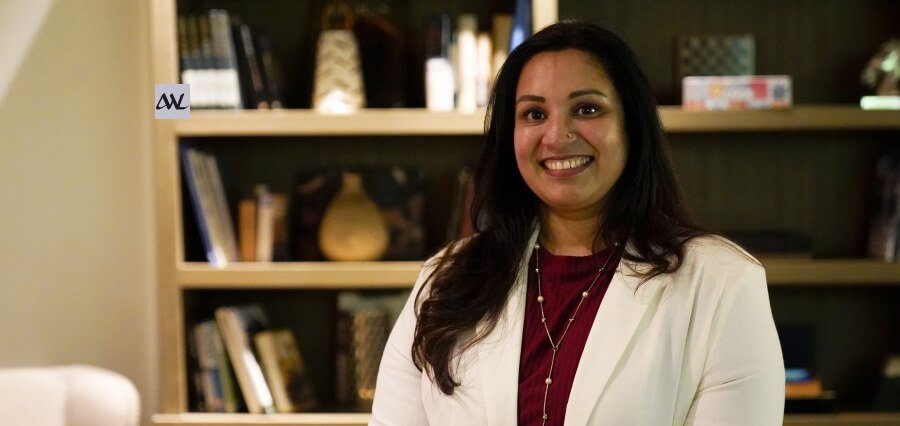
Manjula Pillai is one of those teachers who made a conscious decision to move away from mainstream teaching into an area that she identifies as deeply human and quietly world changing. She is chasing the moment where every child feels seen and catered to and every parent knows that their child has a safe haven.
A Career Shaped by Systems Thinking
With over twenty years in international education across K–12and college settings, Manjula’s journey into inclusion has been shaped by experience across curricula, teaching and non-teaching roles, and diverse cultural contexts. Over time, a consistent pattern emerged: some children thrived; others were quietly left behind, not because they lacked ability, but because the system was not designed with them in mind.
With every new context, every new role, came new learning – sharper instincts, deeper questions, and a clearer sense of what schools were getting right and what they were conveniently ignoring. This understanding now informs her work at Ambassador School Dubai. Rather than focusing solely on individual interventions, she works with teams to examine structures — curriculum planning, assessment design, professional learning, and family engagement — to ensure they reflect inclusive principles.
The Platform that Makes the Work Possible
Ambassador School Dubai opened in 2010 with a mission to inspire, inquire, and innovate. Those are not empty words here. The school sits inside one of the most culturally layered cities in the world, drawing students from communities all over. It holds the distinction of being a highly regarded Inclusive school with multiple initiatives aimed at the individual, parental as well as community level. The school was the first in UAE to win the Golden Peacock Award for Innovative Service. Their focus on Curriculum Excellence and Holistic development signals a genuine, sustained commitment to education that goes beyond examination results.
Schools are not transformed by one individual. They evolve when leadership, teachers, specialists, and families commit together to designing learning environments where every child belongs. At Ambassador School Dubai, inclusion is not a standalone initiative; it is a shared responsibility embedded into the fabric of the school’s culture. The Happiness Centre here operates within a clearly defined framework aligned with the Dubai Inclusive Education Policy Framework and the E33 goals by the KHDA.
Manjula Pillai works within this collective vision, collaborating closely with the Senior Leadership Team, teachers, specialists, and families to strengthen systems that ensure equitable access to learning for all students.
From Compliance to Culture – The Real Meaning of Inclusion
In many schools, inclusion risks becoming a compliance exercise – something to be evidenced for inspectors and filed away. At Ambassador School Dubai, leadership has prioritised moving beyond that model. Manjula Pillai contributes to this shift by supporting staff in translating policy into practice. The emphasis is on sustainable change. Inclusion is most effective when every teacher sees themselves as responsible for access, not as referring that responsibility elsewhere.
For Manjula Pillai what began as a focus on learning support has widened into a full philosophy of educational equity- something that touches school culture, teacher language, assessment design, and the way a school makes a new family feel welcome from the very first day. This may mean redesigning a unit so that multiple entry points are built into learning tasks. It may involve coaching a teacher through strategies for supporting regulation and engagement. It may require ensuring that communication with families is culturally responsive and accessible.
Centering Well-Being and Identity
A key dimension of the school’s inclusion philosophy is recognising that learning cannot be separated from emotional safety and identity. A student who is frightened, grieving, exhausted, or carrying something heavy from home does not leave any of that at the school gate. They bring it into the classroom, and it shapes everything about how they learn, or whether they can learn at all. Working in collaboration with pastoral and leadership teams, Manjula Pillai supports approaches grounded in social-emotional learning.
This means acknowledging that students arrive at school carrying diverse experiences. Beyond cultural and linguistic backgrounds, many students come from homes shaped by very different realities —family conflict, caregivers under strain, or situations where adults themselves are still learning how to navigate a child’s needs. These lived experiences influence how students regulate emotions, build trust, and engage with learning. It means ensuring that classrooms remain emotionally safe spaces where family circumstances are met with understanding rather than judgment. Identity-affirming education, when embedded thoughtfully, strengthens belonging and academic engagement for all learners.
Balancing Data with Human Insight
Inclusion work at Ambassador School Dubai is informed by data — progress tracking, intervention outcomes, and measurable targets. Yet numbers alone do not tell the full story. Manjula Pillai uses data as important information, not as the final word. She tracks outcomes, measures progress, and pays attention to what the evidence says about which approaches are working. That rigour matters. Without it, inclusion becomes a feeling rather than a practice.
But she also knows that the most important things about a child rarely show up in a spreadsheet. A student’s growing confidence. A parent’s relief at finally being understood. A teacher who started the year resistant and ended it curiously. These are the things she also measures. The combination of the two, the evidence and the human story behind it, is what keeps decision-making honest.
Building Capacity Across School
An important part of Manjula’s work is investing in the educators who will continue strengthening inclusive practice across the school. She does this less through formal instruction and more through shared problem-solving, modelling conversations, and creating opportunities for teachers to step into leadership within their own classrooms and teams. By bringing colleagues into the decision-making process, she helps them build both clarity and confidence in supporting diverse learners.
She identifies with teachers who show curiosity about students who may not fit easily into traditional systems. Through mentoring conversations and reflective dialogue, she creates space to explore questions around bias, access, and equity in ways that feel constructive rather than confrontational. The emphasis is always on growth and professional trust.
Her intention is not to position herself at the centre of the work, but to ensure that inclusive practice is sustained by many capable hands. The goal is that teachers carry this work forward with both skill and personal conviction — not because they were instructed to do so, but because they have seen its impact and believe in it themselves.
Extending the Conversation
Beyond the school, Manjula Pillai has contributed to wider professional forums, sharing practical strategies around equity, and inclusive design in education. These engagements reflect not personal recognition, but her broader commitment to participating in global educational dialogue, shared learnings and continuous improvement.
She has spoken at international education forums like GESS – Interventions for Supporting Able and Gifted Learners and the Edu 2.0 Conference – Special Education Needs: Inclusive Practices that Work bringing her perspective on inclusive learning to educators across the world. Her talks are not an abstract talk about policy frameworks. Instead it is the words of someone who has watched classrooms transform through these approaches. It is grounded, practical, and drawn from years of real experience in real schools. She has also offered online sessions on Practical Approaches to Inclusive Teaching and Creating Inclusive Classrooms for the teachers in India.
Making Belonging the Norm
The work of inclusion is incremental and often quiet. It unfolds in planning meetings, coaching conversations, and collaborative reviews of student progress. It succeeds when a classroom becomes accessible without drawing attention to the adaptation, and when a family feels genuinely heard. At Ambassador School Dubai, inclusion is understood not as a parallel service but as the core of effective schooling. Through coordinated effort across leadership, teachers, specialists, and families, the school continues to strengthen systems where belonging is not conditional.
For Manjula Pillai her vision for inclusive education is something she is already building, one decision at a time. She wants schools where inclusion is not a support service running parallel to the main stream class. Instead, it is every mainstream classroom where the teacher thinks about access by default, and where belonging is not earned by fitting in but guaranteed by showing up.