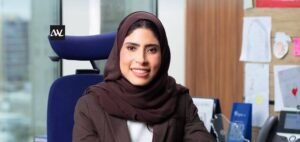

The earliest lessons in leadership often begin far from boardrooms, which stem from classroom environments that develop trust through individual student interactions. Sabiha Kazi started her career as a homeroom teacher, which established her understanding that students need three elements to succeed in education. This belief guided her career path from teaching activities to schoolwide change while she continued to focus on the essential role of human connections in education.
She now works as an English Teacher at ADNOC Schools through her unique combination of teaching expertise and technology skills, and her ability to build relationships with others. The school leadership, teaching, and mentoring experiences she gained throughout her career in Kuwait, India, and the UAE have developed her professional philosophy, which prioritizes learning before technology while placing people as the focus. She achieves academic excellence through her caring approach, which enables students to become effective communicators and teachers to develop their teaching skills. Her journey reflects a quiet but enduring truth, leadership in education grows strongest when it grows from purpose.
The Journey Begins: Where Leadership Takes Root
Sabiha’s leadership journey emerged from her work as a homeroom teacher. She discovered that students learn best when they feel seen, safe, and valued, principles that would later shape her approach to leading entire institutions. “I was both a guide and a guardian. Leadership in education is ultimately relational,” she reflects.
A pivotal moment arrived in 2011 when she received formal training on a Learning Management System. At a time when digital tools remained novelties in many schools, this experience opened new possibilities. Yet rather than becoming “tech-first,” she embraced a “learning-first with technology as a bridge” philosophy. The training taught her to measure impact not by tools adopted, but by the quality of learning they enable.
Shortly after, the school chairman posted an appreciation note recognizing that many students specifically requested Sabiha Kazi as their homeroom teacher. They saw a motherly figure in her—for some. She provided the reason they looked forward to school. Those words anchored her purpose. “They reminded me that empathy isn’t a soft skill; it is foundational for learning. The human data smiles at the door, a child’s quiet confidence is as important as any chart or score,” she explains.
Recognition followed her in 2014 when she received her first award in Kuwait. While she maintains that awards don’t measure one’s worth, they reflect that her balanced approach between pedagogy and technology, between rigor and care, resonated beyond her classroom. The acknowledgment encouraged her to expand her focus toward scaling these ideas across teams and schools.
Expanding Influence: From Classroom to Community
By 2016, Sabiha Kazi felt called to return to India and serve as a mentor for training teachers. This transition marked as a turning point in her leadership scope. “The classroom is the heartbeat of a school, but mentorship of a teacher is the circulatory system,” she observes. Through mentoring, she adopted a coaching cycle which is observed, co-planned, co-teaches, reflected, refined, providing teachers real companionship in change rather than directives to implement alone.
This period deepened her conviction that transforming schools begins by equipping teachers, honoring their expertise, and providing time and tools to adapt. When leaders invest in teachers, they invest in every learner those educators touch.
In 2018, she stepped into her first principalship. The role demanded courage and clarity as she aligned curriculum with culture, assessment with wellbeing, and daily routines with long-term vision. That year brought recognition as the Best Upcoming School and the Gem of India Award for her personally. Yet she defines success beyond accolades, focusing instead on sustainable academic gains, teacher development, student voice, and ethical data use.
The journey continued to the UAE in 2019, where she began working with American schools. She leaned deeply into data-informed strategies to increase MAP scores, always pairing analytics with human stories inside every classroom. “Data tells us ‘What’ and ‘where,’ but teachers and students tell us ‘Who’ and ‘why’. The approach combined flexible grouping, targeted instruction, and formative assessment with celebrations of growth, not just high scores, to build confidence and momentum.
Later, heading to elementary school brought her back close to young learners’ daily energy, a space where curiosity runs loud, resilience takes root, and leadership develops through small acts of kindness and courage. In Sharjah, heartfelt testimonies from parents praised the school’s culture, children’s confidence, and the sense of care wrapping around academics. These testimonies served as compass checks, reminding her that parents are partners whose trust requires transparency, empathy, and consistent communication.
Innovation with Purpose: Technology Serving Humanity
At ADNOC Schools since 2023, Sabiha Kazi has expanded platforms for student expression through debates, public speaking, drama, mime, and digital storytelling. She identifies them as laboratories instead of extracurriculars, laboratories where students practice leadership skills.
She has championed students authoring their own stories using educational apps and compiling digital books. “They become creators, not just consumers. They learn the craft of narrative and the pride of publication,” she notes with pride. Her belief in responsible, purposeful AI uses centers on using these tools not to replace thinking but to scaffold brainstorming, feedback, and revision, while teaching students to verify, reflect, and own their ideas.
This approach earned her a shortlisting for the GESS Awards Dubai in Best Use of Digital Technology in the Classroom. The recognition affirmed that digital tools could amplify human potential when used thoughtfully, not for technology’s sake alone.
Leading Through Challenge: Courage in Action
Transformational leadership demands courage to question long-standing norms and envision futures others may not yet see. Sabiha Kazi has consciously disrupted several entrenched challenges throughout her career.
When introducing project-based learning in a school dominated by traditional lecture-style teaching, she faced hesitation from teachers concerned about curriculum timelines and classroom management. Parents worried their children might “fall behind.” She launched a small-scale pilot, a “Community Solutions Lab,” where students identified local issues and proposed actionable solutions.
Within weeks, teachers witnessed students collaborating passionately, thinking critically, and presenting creative solutions. Success convinced educators and parents alike, leading to integration across multiple grades.
She has challenged hierarchical decision-making by introducing distributed leadership through teacher-led committees co-designing curriculum, technology initiatives, and school events. Initial skepticism about shared leadership creating confusion gave way to breakthrough moments, like junior teachers redesigning assessment rubrics that dramatically improved student engagement.
She has also championed shifts from summative exams emphasizing memorization towards formative, competency-based assessment. When a Grade 9 mathematics project had students solving real-world city planning problems, initial parental uncertainty transformed into excitement as they watched students present thoughtful, data-driven solutions.
The Human Element: Empathy in the Digital Age
In an era dominated by data dashboards and AI-powered platforms. Sabiha Kazi ensures empathy, inclusion, and emotional intelligence remain central to educational leadership. She dedicates time to meaningful one-on-one conversations, classroom observations, and informal interactions—looking beyond metrics to address real human dynamics shaping learning outcomes.
When a young teacher struggled with student engagement despite diligence and creativity, Sabiha Kazi spent time observing her classroom, listening to reflections, and exploring student experiences alongside her. Together they co-created strategies making learning more interactive and personalized. Student engagement improved, the teacher gained confidence, and a culture of collaborative problem-solving strengthened.
She has intentionally fostered inclusive structures, teacher-led committees, student councils, mentorship programs for underrepresented staff creating equitable opportunities for participation and growth. One student with learning differences who excelled in creative arts but struggled with traditional assessments found success through differentiated learning experiences and adaptive technology. His confidence soared, inspiring peers and demonstrating that inclusion is a lived practice, not merely policy.
A Vision for Tomorrow: Gratitude as Fuel
Across these milestones, gratitude has grown stronger. The UAE has given Sabiha Kazi love, respect, and opportunities to lead with purpose. She believes gratitude must be active, which drives her sustained commitment to community service, designing support systems for students who need educational help most. “Leadership isn’t only about what happens within school walls. It’s also about how schools reach beyond them to lift the community,” she asserts.
For emerging leaders, she offers clear guidance: “Lead with courage, act with integrity, and invest in people. Embrace uncertainty as an opportunity. Seek mentorship, offer mentorship. Balance innovation with values. And above all, be grateful for the opportunities that allow you to make a difference.”
Her long-term vision centers on cultivating ecosystems where educators feel empowered, learners find inspiration, and communities experience enrichment. Where innovation follows ethical guidelines, where collaboration drives impact, and where every decision honors individual and societal potential.
As she reflects on the journey from Bhavans Kuwait to India and back to the UAE, through roles as homeroom teacher, mentor, principal, and elementary head the throughline remains clear: purpose guided progression. Each role widened the circle of influence, each milestone refined her philosophy, and each challenge strengthened her commitment to lead change honoring both human dignity and academic rigor.
Sabiha Kazi’s story proves that transformational leadership doesn’t require choosing between tradition and innovation, between data and empathy, between excellence and care. Instead, it demands holding all these elements in balance, with courage, conviction, and an unwavering commitment to the simple, profound goal that brought her into education: to help learners thrive and to help educators flourish.