
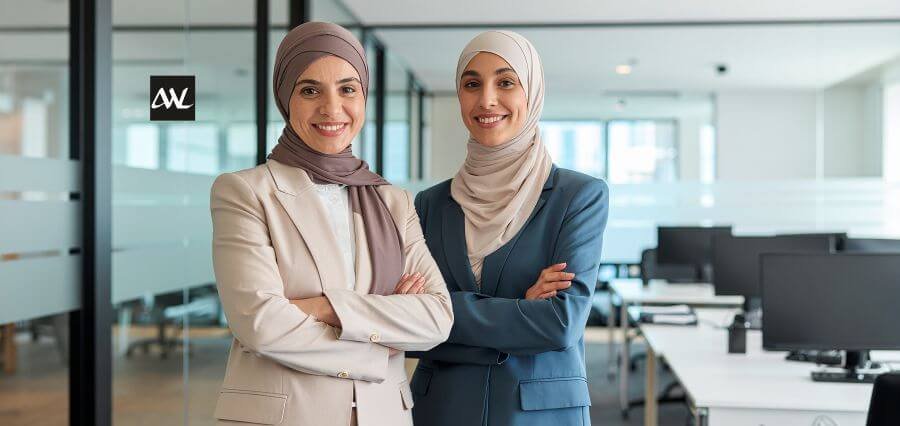
Middle East is headed towards a revolution where economies get modernized, industries get diversified, and social development and sustainable development happen under women leadership empowerment. Women leaders’ empowerment is the most significant key to social advancement and sustainable development. Although women have never been part of leadership roles because of traditionally based, cultural, and institutional factors, nowadays there has been a quantum leap with further endeavors being established to provide gender equality and offer women a chance of career growth. From education reform to mentorship networks and government-led programs, the far-reaching scope of efforts is remapping the landscape, so that women are respected and valued at all levels of leadership. The tenacious push to get women to the table of decision-making is not only revolutionizing models of leadership, but making a brighter, more inclusive future for the region as a whole.
This article outlines the most prominent areas in which Middle Eastern women are being empowered to become leaders.
Fostering Gender Equality to Leadership
The Middle East has also taken considerable strides in the recent past towards embracing gender equality and women leaders. They have come to understand that empowering women is not only a social development aspiration, but also economic development and innovation. National efforts like Saudi Vision 2030 and the UAE Gender Balance Council aim to break inhibitions and build a diverse workplace with more women, especially in higher positions. These efforts are based on the building of women’s talent-enabling environments at education, mentorship, and experience levels within professional networks.
There are challenges for cultural norms to change and break through institutional biases regardless of such efforts. Women are generally held back in their climb to leadership positions by deeply ingrained social attitudes that have been around for decades and never served on the boards of big companies and senior management. The few women who have crossed these hurdles are redefining leadership and giving generations to come a blueprint. By celebrating their achievements and calling for open workplaces, they are dismantling stereotypes and constructing a more inclusive corporate culture founded upon diversity and diverse leadership.
Capacity Building through Learning and Mentorship
Learning and mentorship are the major drivers in enabling women to take up the leadership role in the Middle East. Access to quality training and education provides women with the opportunity to gain access to training and exposure that will equip them to compete fairly in more globalized and more advanced economies. Governments and institutions are sponsoring scholarship schemes, leadership, and entrepreneurship to raise career advancement of women. Universities and research institutes are working together with international institutions in developing specialty curricula on gender-defined topics and capacity building.
Mentoring initiatives also step in and give women psychosocial care, networking, and direction along the way of their professional career. Even the women themselves who are the leaders are now actively involved in mentoring newer professionals, giving practical tips, and establishing systems of support where women learn from one another’s experience. By pairing future leaders with successful role models, the kind of programs empower women with the tools to advance within organizational ranks and surmount obstacles. With increasing mentorship networks, more and more women gain confident enough to apply for leadership positions and campaign for diversity-biasing policies.
Corporate and Government Initiatives
While business and government do have an important role in playing towards creating an enabling environment for women leadership, there is top priority given to women leaders in some multinational companies and indigenous organizations practicing diversity and inclusion policies. Flexible work arrangements, family-friendly employment practices, and rapid women’s career advancement programs by leadership are some policies that are being pursued. Through inclusion cultures, organizations don’t just make better decisions and innovate but also employer of choice in competitive markets.
Middle Eastern governments also implement regulation systems for spearheading women’s leadership engagement. Women boards and organizational awards that are at the leading edge in the gender diversity have been established to offer accountability and quantifiable progress. In parallel, attitude-transformation campaigns and gender-sensitive leadership are gaining momentum. Generally, the initiatives are creating a new paradigm for leadership in which women are being positioned as transformation agents to achieve regional economic resilience and social development.
Conclusion
The empowerment of Middle Eastern women is no longer a discretionary goal but a strategic requirement to achieve economic growth, social integration and innovation. Government and other institutions are putting in place organized mechanisms using specific policies, capacity-building programmes and mentorship projects that enable women to have the confidence, skills and support necessary to make efficient leaders. The dividends so far are gaining more and more acceptance of the capacity of women to inspire and form change and guide generations. Nevertheless, with continuous struggles, the joint actions to eliminate the obstacles and achieve gender equality are already demonstrating some positive outcomes. More women in the leadership are creating a new story that is characterized by resilience, diversity and inclusive leadership. The future is becoming one of a long-term commitment, group endurance, and a common vision of a Middle East in which leadership based on merit, integrity and empowering all its citizens are part of the progress.
Read Also : From Concept to Execution: The Impact of Women Innovators on Society