
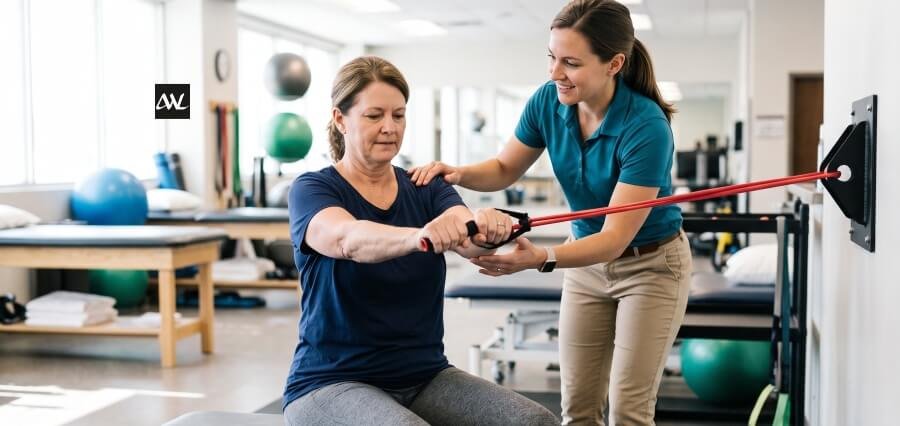
Recovery from injury within sports has changed tremendously due to the continuous development of science, medicine, and technology. While earlier, most injuries used to keep athletes out of competition for a long period, it is now possible to create recovery plans tailored to the needs of each athlete based on their physical state and what they hope to achieve through recovery. Recovery from sports-related injuries now involves more than just the treatment of the injury itself. It involves strengthening, mobility, regaining confidence, and getting the athletes ready for competition again.
As expectations from athletes in terms of their performance become ever more intense, the roles and duties of sports rehabilitation practitioners expand accordingly. Sports rehab specialists cover all aspects of sports injuries – rehabilitation, performance enhancement, and injury prevention and use assessment techniques that are based on technological innovation. The changing roles of these specialists show the fundamental shift in the process of modern sports recovery. It is not only about recovering from an injury and getting ready to compete but also being ready to perform at a higher level in terms of strength, resilience, self-confidence, and overall physical condition.
Beyond Injury Care
Recovery from injury and enabling athletes to get back into the game has become outdated in modern-day sports. Recovery is now a well-defined process involving many aspects like physical status, movement quality, workload, psychological readiness, and performance. The Sports Rehabilitation Specialists are among the experts who are contributing to this revolution in many ways through a combination of clinical expertise and a performance-based approach. It all starts with their identification of the nature of injury, but it does not end there. It includes the factors that could have possibly led to that injury and other performance-related aspects as well.
In contrast, the current approach pays more attention to testing, prevention, and achievement of positive results. Instead of simply paying attention to pain relief or exercises aimed at rehabilitation, they examine such aspects as the strength, flexibility, balance, coordination, and movement of the athlete. This helps them create rehabilitation programs that can take into account all the specifics of the sport and position in which the athlete is participating in competitions.
Technology and Precision
Technology is becoming an essential element of rehabilitation in modern sports medicine. New technologies for assessing an individual’s movements, strength, load, and recovery can be utilized by practitioners to get better insight into these aspects. Technology such as wearable technology, motion analysis system, digital performance platform, and data-driven monitoring can offer useful information about an individual’s response to training and rehabilitation. Technology makes it possible to adapt rehabilitation to a certain individual rather than follow the predetermined process.
Technology usage will also make it easier for communication between athletes and professionals such as coaches, physicians, strength and conditioning specialists, and rehabilitation specialists. Professionals will be able to track progress and detect problems before the latter become major ones. Nevertheless, it is clear that technology still plays its role best in conjunction with professional discretion and personal contact with the athlete. In this case, the role of Sports Rehab Specialists is changing from being exercise supervisors to being decision makers.
Building Resilient Athletes
In the world of sports rehabilitation, one of the most important shifts that have occurred is the shift in injury prevention for the future. The process of bringing back an athlete into competition is not enough to be regarded as the end of successful rehabilitation; what is more, an athlete should be able to come back with proper technique, physical durability, and the ability to cope with the training load. The process involves taking into account not only the injury itself but also the general physical condition of an athlete.
The connection between the athlete and the rehabilitation specialist has also evolved into one where there is increased collaboration. The athlete is taught to be knowledgeable about his/her rehabilitation process, to be able to identify red flags, manage the recovery process, and take more ownership of his/her physical health. Sports Rehab Specialists will play an important part in achieving this by incorporating education, personalized treatment, graduated exercise, and performance preparation. As sports become increasingly challenging, their significance to the formulation of successful rehabilitation plans cannot be ignored.
Conclusion
The development of recovery methods for athletes is another example of the importance of taking an evidence-based and holistic view toward rehabilitation. In today’s world, rehabilitation methods involve the combination of expertise, training, technology, and constant evaluation that take into account the personal features of athletes. In turn, this makes the process more systematic and quantifiable, and helps athletes have better awareness of their recovery process and physical condition.
Looking ahead, rehabilitation professionals are set to be instrumental in determining the future direction of sports recovery. The combination of personalized treatment, technology, and sports science will be used by rehabilitation professionals to define how success will be determined in the industry. The future of sports recovery will place much emphasis on resilience, prevention of injuries, and performance, thus making it necessary for rehabilitation to be an integral part of the process for athletes.