
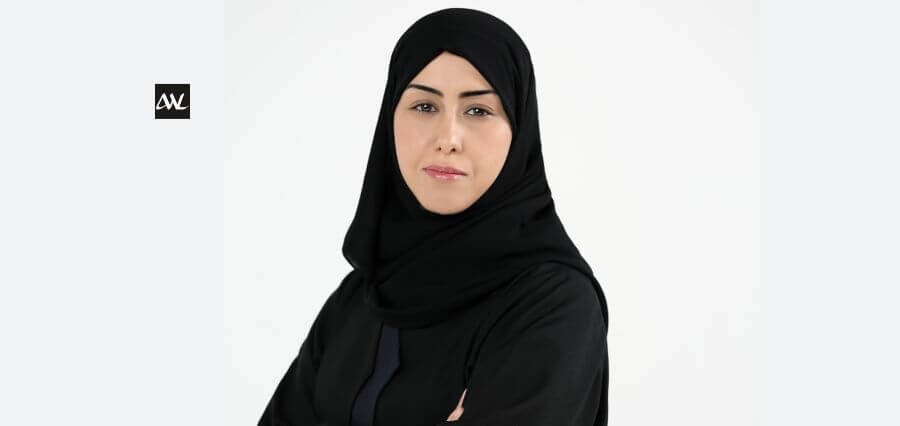
The time had not yet come for her to enter the fintech industry through her work because digital payments in her area still needed to develop to their full operational potential. Huda Albenmousa started her career in Saudi Arabia’s developing e-commerce and fintech markets by working on projects that created market change through merchant partnerships, completion of business initiatives and compliance processes, and creating trust through building customer loyalty.
Her development as a leader started from her work at which she gained firsthand experience in operations. Through her work with banks, regulators, and national organizations, she supported building payment systems that would stabilize and gain traction and momentum over time.
She is leading PayTabs in Saudi Arabia through her role as Country President by implementing her leadership style, which creates sustainable growth through balanced operational management and trustworthy innovation. A leader emerges through her responsibilities, which she handles with strength while developing solid connections with institutions that will endure through time.
Learning to Lead from the Ground Up
Huda’s leadership identity took shape in an environment where responsibility often arrived before clarity. When PayTabs officially launched in Saudi Arabia, fintech itself was still taking shape in the region. E-commerce hadn’t not yet matured, enterprises were only beginning to explore digital business models, and trust in online financial services remained fragile.
She began her journey remarkably close to the ground, engaging directly with merchants, addressing operational challenges, providing technical guidance, responding to legal and compliance inquiries, and navigating pricing discussions firsthand. This formative phase taught her a critical lesson: technology alone does not drive adoption. Markets need education, adaptation, and solutions designed to evolve alongside business ambitions.
As her role expanded to working closely with banks, regulators, and national payment stakeholders, her operating style shifted from solving immediate problems to building foundations that could scale responsibly. The transformative inflection point came with country leadership, where her focus moved from “making things work” to “making things last.”
The Weight of Formal Authority
For nine years before officially assuming the role of Country President, Huda drove execution and accountability without full formal authority or external visibility. When that responsibility became official, everything changed.
“Formal authority reshapes how you view numbers, assess risk, and judge decisions. You no longer look at performance in isolation; you evaluate every outcome through the lens of sustainability and long-term consequences,” she explains.
True leadership, she discovered, means standing behind every outcome in the organization, especially the difficult ones. Her role shifted from personal performance to institutional protection, safeguarding the company, its people, and its solid market reputation while making complex decisions affecting clients, partnerships, and employees.
“Beyond the title, my role is fundamentally stewardship. I’m responsible not only for growth, but for protecting trust, with regulators, banks, merchants, partners, and our internal teams,” she says.
According to her, the hardest decisions are rarely commercial. There are moments when short-term revenue must be sacrificed to preserve long-term credibility. Leadership at her level also requires making difficult people-related decisions, building the right team, addressing underperformance with clarity and fairness, and fostering a culture where accountability and collaboration coexist. These decisions rarely make headlines, but they do define organizational strength.
Working Within, Not Around, Regulation
One of the most misunderstood truths about fintech innovation in regulated markets, Huda argues with the belief that regulation slows progress. She holds the opposite view.
“Regulation shapes innovation that can scale responsibly and endure. In markets like Saudi Arabia, fintech operates within a broader national financial system built on trust and stability. Innovation succeeds not by working around regulation, but by being designed with it from the start,” she states firmly.
She challenges another common misconception, that scale requires building everything internally. “No organization, even regardless of its size, can or should do everything alone. Real strength emerges when institutions collaborate, connect their capabilities, and build ecosystems rather than isolated solutions,” she emphasizes.
This philosophy has become central to PayTabs’ approach. The company positions payment orchestration as a critical lever for scale, enabling businesses to manage multiple payment methods, processors, and supporting fintech capabilities through a single intelligent platform.
“Payment orchestration brings flexibility, resilience, and visibility to payments while simplifying operations as businesses scale. At its core, it’s not about adding complexity, it’s about simplifying it by abstracting operational and technical challenges behind a unified platform,” she explains.
Navigating Early-Stage Complexity
When PayTabs began launching digital payment solutions on a national scale, the primary challenge was ecosystem maturity. Fintech-specific regulatory frameworks were still evolving, e-commerce adoption remained early, and payment infrastructure was in development. Existing regulations were designed for traditional financial models and had not yet aligned with emerging fintech services.
PayTabs addressed these challenges through constructive engagement with regulators, banks, and ecosystem partners, adapting to existing frameworks while contributing to market readiness through education, transparency, and phased deployment.
“By launching incrementally and prioritizing trust, we supported the gradual maturity of Saudi Arabia’s digital payments ecosystem,” she says.
Balancing Speed with Discipline
In one of the world’s fastest-growing economies, speed is often demanded. But in fintech, trust remains non-negotiable. Huda navigates this tension by treating growth and risk discipline as interdependent forces.
She spends considerable time reviewing performance indicators, transaction success rates, operational resilience, compliance posture, and partner alignment, before approving expansion. When trade-offs arise, she prioritizes trust over velocity.
She notes that in Saudi Arabia, trust is the currency that enables scale, adding that by treating risk discipline as an enabler rather than a constraint, organizations can grow responsibly while sustaining momentum.
The Metrics That Matter
While merchant growth and transaction volume capture attention, Huda focuses on metrics that reflect sustainability. Transaction success rates rank as her top priority because they directly indicate platform reliability. Enterprise retention serves as another critical indicator, signaling long-term confidence in stability and compliance.
She also tracks cost efficiency and ecosystem depth, to assess how well PayTabs integrates across banks, regulators, enterprises, and fintech partners. “When these metrics move together, they signal not just growth, but leadership in the market,” she says.
Infrastructure Over Hype
When asked which aspect of fintech is overhyped, Huda does not hesitate to talk about surface-level innovation. What quietly creates lasting advantages, she argues, is infrastructure-driven innovation: payment orchestration, regulatory alignment, data intelligence, and system resilience.
“These capabilities don’t generate headlines, but they determine whether platforms can scale reliably. Fintech leaders will be defined not by how quickly they launch products, but by how well they build systems that others can trust and depend on,” she observes.
Building High-Impact Teams
Huda’s approach to team building reflects her broader leadership philosophy. She looks first for judgment and integrity, recognizing that technical skills can be developed but sound judgment and ethical clarity prove far harder to teach.
She seeks individuals comfortable with ambiguity who can move forward without perfect information. Curiosity, resilience, and the ability to connect across technology, compliance, operations, and business represent essential traits. Ownership matters deeply; team members must understand the broader impact of their decisions and stand behind outcomes.
PayTabs has invested significantly in young talent, training and employing graduates while giving them exposure, responsibility, and room to grow. Many have since progressed into leadership roles within PayTabs or moved on to hold leadership positions in other leading fintech companies across the region.
“I take immense pride in that. It reflects our belief that building talent is as important as building technology,” she says.
She does not tolerate blame culture, siloed thinking, or shortcuts that compromise trust or compliance. “Speed without responsibility creates risk, and individual brilliance without collaboration weakens teams. Sustained performance comes from clarity, clear expectations, defined decision rights, and transparent escalation paths,” she states.
Leadership Beyond Gender
When it comes to women in fintech leadership, Huda offers a nuanced perspective. She acknowledges that perceptions have long existed, suggesting that a woman’s emotional nature limits her decision-making capacity. According to her, qualities of women like emotional intelligence, empathy, and intuition are not weaknesses. She strongly believes that when these qualities are combined with discipline and sound judgement, they justify powerful leadership.
Women have assumed leadership roles across both private and public sectors, demonstrating decisiveness, resilience, and strategic clarity. In Saudi Arabia, women today contribute at the highest levels of decision-making, helping shape the future of critical industries including fintech.
Speaking from personal experience, she notes: “I have not faced limitations because I am a woman. I have been met with respect, trust, and equal opportunity alongside my male peers. This reflects the progress our market has made and a leadership culture that values merit, responsibility, and results.”
A Legacy Built on Contribution
Looking towards 2026 and beyond, Huda’s vision for PayTabs in Saudi Arabia remains grounded in the values that have guided her journey. She wants the company to be seen as a trusted and dependable enabler, one that operates quietly in the background but plays a meaningful role in powering the Kingdom’s digital economy.
“Success is not about being the most visible player in the market. It’s about building something that works reliably, scales responsibly, and earns trust over time. I want PayTabs to be part of the financial infrastructure that businesses rely on without hesitation, because it’s resilient, compliant, and designed with long-term impact in mind,” she reflects.
On a personal level, her aspirations focus on contribution over recognition, aiming to build lasting infrastructure platforms, stronger teams, and confident future leaders within PayTabs and beyond.
As a woman leader, her aspiration has never been to be seen as an exception. She hopes her journey contributes to normalizing the presence of women in leadership roles across fintech and beyond, where decisions are respected, authority is earned, and success is measured by results. She concludes that if the next generation enters the industry seeing leadership as accessible through merit and responsibility, then that, for her, is a legacy worth building.
In an industry often defined by disruption and velocity, Huda Albenmousa stands as a testament to a different kind of leadership, one that values foundations over fanfare, ecosystems over individual achievement, and trust over transactions. Her work at PayTabs demonstrates that in fintech, as in any regulated market, the most transformative innovations are often the quietest ones: the systems built to last, the partnerships formed on shared accountability, and the trust earned one decision at a time.